


Campo Verde Private Conservation Area: Preserving Amazonian Biodiversity in Ucayali

The Private Conservation Area Campo Verde is located on private land owned by the company Bosques Amazónicos BAM near the city of Pucallpa, in the heart of the Peruvian Amazon. This nature reserve serves as a vital refuge for biodiversity conservation in one of the regions most affected by deforestation and land-use change. Recognized and supported by the Ministry of the Environment (Minam) for four decades, this sanctuary of life is located in the district of Manantay, province of Coronel Portillo, department of Ucayali, and is part of the more than 20,000 hectares of privately owned land protected by BAM.
Date the area was established in Campo Verde
This area, which serves as a wildlife refuge, was officially established on September 27, 2022, following the enactment of Regulatory Decree No. 193-2022-MINAM. Covering 8,049.87 hectares in the region of Ucayali, this conservation area is a true symbol of environmental commitment. It is not only the second private conservation area in Ucayali, but also a key piece in the national conservation puzzle.
The primary purpose of the ACP Campo Verde is to conserve the mature Amazon rainforest and ensure its continued well-being. This delicate ecosystem is home to an astonishing diversity of wildlife, a treasure that must be protected to guarantee the survival of the species that inhabit it. Aguajal ecosystems, in particular, are the focus of special attention due to the high concentration of carbon stored in the form of peat within the scope of the ACP Campo Verde. Furthermore, the Campo Verde forests are home to hundreds of plant and animal species, many of which have yet to be discovered by science— tangible evidence of the biological abundance found in this natural paradise.


The aguaje is an ally in the fight against global warming
The term "aguajales" refers to humid forest ecosystems covered with extraordinary swamp vegetation, where the dominant plant is the aguaje palm. Its importance extends beyond its culinary and commercial value, as its life cycle helps maintain the delicate balance of the Amazonian ecosystem.
One of the ways the aguaje helps combat global warming is through its ability to store carbon. Tropical rainforests are known as “carbon sinks” because they absorb and store large amounts of carbon dioxide, a greenhouse gas responsible for global warming. The aguaje, growing in these rainforests, contributes to this process by accumulating carbon in its biomass. Furthermore, the sustainable management and reforestation practices that promote its cultivation can increase the carbon storage capacity of the forests where it thrives.

Faunal Diversity
Campo Verde ’s skies are filled with the wings of 228 bird species, a figure that accounts for 80% of all bird species found throughout the Ucayali region. However, not all of these species are equally secure. The small and rare black-tailed antwren (Myrmoborus melanurus), a resident and extremely rare species, faces a high level of threat, adding urgency to conservation efforts. This abundance makes Campo Verde a paradise for ornithologists and researchers, as its avian diversity offers a vast field of study.
Campo Verde ’s forests are also home to 20 species of mammals, including the iconic tapir, or sachavaca, whose vulnerable status calls for specialized attention. Moreover, the biodiversity doesn’t stop there: 23 species of amphibians and 19 species of reptiles have found refuge in this protected area.


Notable findings in Campo Verde
An exciting discovery in the rainforests of Campo Verde took place during research conducted between 2021 and 2022 in the forests protected by BAM as part of the “ REDD+ : The Last Habitat” project. The Peruvian Institute of Herpetology and the Peruvian Center for Ornithology and Biodiversity (CORBIDI) joined forces to uncover a new species of tree frog, named Scinax pyroinguinis, or “fire-bellied tree frog.” This discovery attests to the constant stream of surprises and secrets that the Amazon rainforest still holds for research teams. You can read the full study on the discovery here.
Imminent Natural Disasters
However, the strategic location of Campo Verde places it within the sphere of influence of a looming threat: forest fires. The expansion of the agricultural frontier in the region has increased the likelihood of suffering the effects of fires set by farmers and ranchers, especially during the dry season. The area faces the challenge of safeguarding its precious biodiversity in an increasingly vulnerable environment.
In summary, the Campo Verde Private Conservation Area serves as a valuable refuge for Amazonian biodiversity in the department of Ucayali. Its dedication to preserving mature rainforest and protecting iconic species such as the black-tailed antbird and the tapir, as well as its contribution to the advancement of ornithology and other scientific disciplines, underscore its importance in the Peruvian conservation landscape. Despite the challenges, Campo Verde demonstrates that a passion for nature and acommitment to conservation can overcome obstacles on the path toward a more sustainable future.


More about BAM
The “Reforestation with Native Species” project at Campo Verde, developed by BAM, has been certified at the highest level— the Gold Standard—under the standards of the Alliance for Climate, Community, and Biodiversity (CCB), in recognition of its commitment to meeting the highest ecological and social standards. It is worth noting that this program, developed by BAM , is the first commercial reforestation program using native species in the world to be certified under this prestigious standard.
Join the fight against climate change and become part of the community by Bosques Amazónicos by clicking here.
BAM, private investment for a sustainable world.
Continue reading
-
 News
The planet is getting warmer. What can we do about it?
The planet is getting warmer. And the consequences are becoming increasingly hard to ignore. This summer, heat waves, droughts, and…
-
 News
The Artisans of Inin Jabe: When Preservation Also Means Creating Opportunities
At the Bosques Amazónicos (BAM), we believe that conservation goes beyond protecting forests. It also means creating opportunities for the people who live…
-
 News
REDD+ Fellows Castañeros – Education as a Priority in the Amazon
Creating Opportunities for Future Generations At Bosques Amazónicos (BAM), we believe that conserving a forest also means investing in the people who protect it.…
-
 News
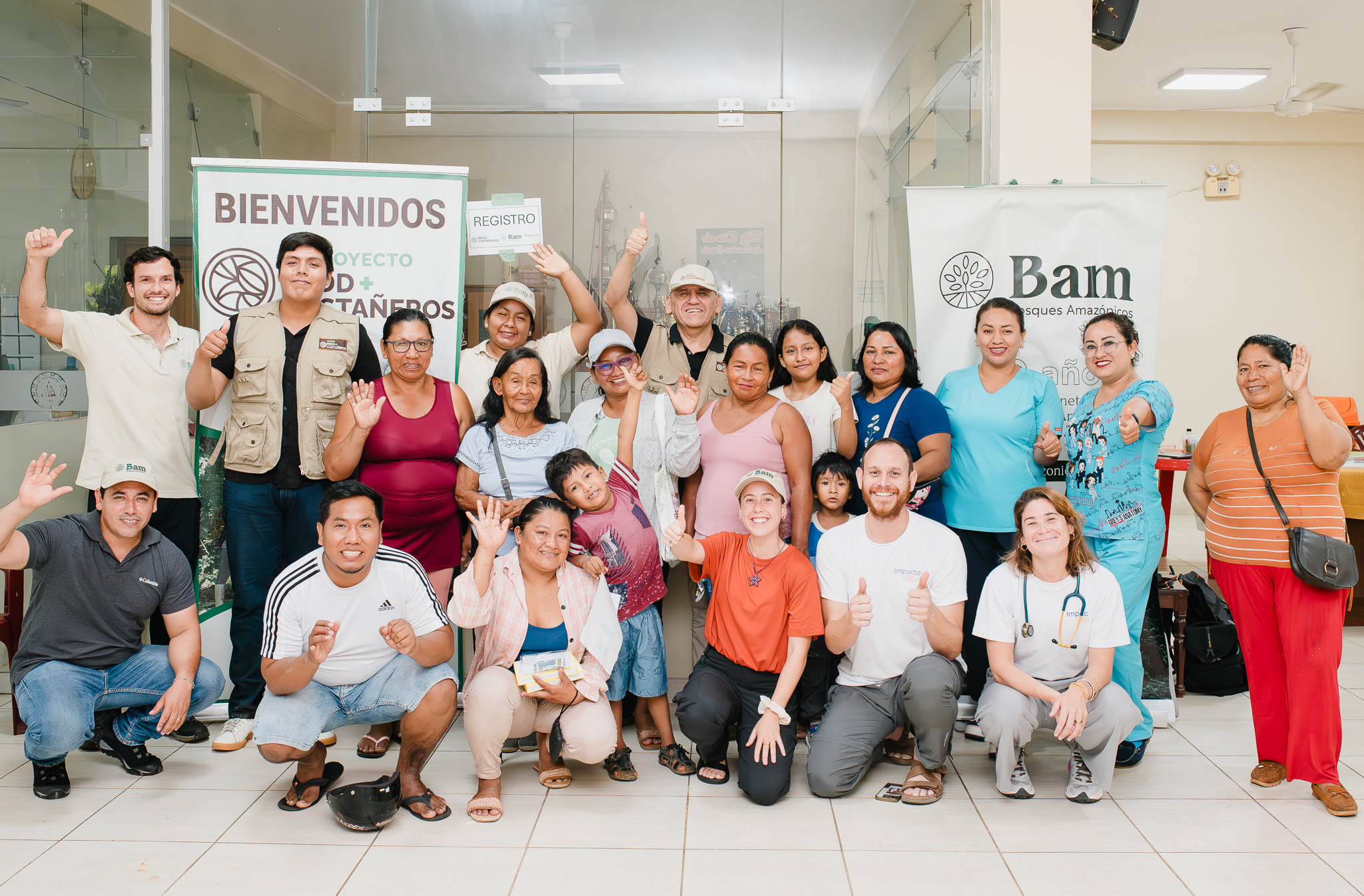
Carbon credits with REAL impact: 200 families benefited from the health campaign in REDD+ Castañeros
REDD+ Castañeros Madre de Dios is conducting a medical outreach campaign that benefits more than 200 families and demonstrates that carbon credits generate…