


Science and Technology at Campo Verde: camera traps in forests protected by BAM

As part ofthe BAM Science Programand within the framework of our strategic partnership with theSan Diego Zoo, between August and November 2022 we installed more than a hundred camera traps in the rainforests on our property in Campo Verde (Ucayali, Peru) in order to record, identify, and quantify the vast diversity of wildlife species found in our forests.
As a result, we were able to record the presence ofrare species that are highly sensitive to human activityin an area of more than 20,000 hectares of forests protected by BAM.The results confirmed that the conservation project area REDD+ The Last Habitat has avery highdiversity of wildlife despite its proximity to one of the most populous cities in the Peruvian Amazon: Pucallpa.
In this article, we’ll take you through a series of questions that spark curiosity and promote informed discussion about the technology, science, and innovation surrounding camera traps—all answeredby José Luis Mena, scientific coordinator at the San Diego Zoo.


This interview took place on September 20, 2023.
How do camera traps work, what benefits do they offer researchers, and what is their purpose in wildlife research?
Camera traps are devices that automatically record the wildlife present in a given area using a motion sensor. The sensor is triggered when it detects the presence of an animal and takes photographs or videos according to the device’s settings. In research, they are a key tool for recording wildlife, estimating its distribution and abundance, and understanding the impact of potential threats, which is important for implementing conservation measures.
What factors are considered when selecting locations for camera traps in the forest?
First, you must have a research question to guide the study. If you’re interested in learning how vegetation influences the distribution of a species, or the proximity to a potential threat, you could position the cameras based on these variables. Once the design has been determined, installing the camera itself requires clearing the immediate surroundings to ensure there are no obstacles preventing a good photograph from being taken, within a radius of approximately 3 to 4 meters.
Why are camera traps so important for protecting or endangered species? How can they help identify individual animals (in the case of certain species) and identify threats to wildlife in the Amazon?
Many endangered species are locally rare and elusive—that is, difficult to observe. Camera traps, being remote and non-invasive devices, allow us to monitor these species, providing information on their abundance and distribution. In the specific case of species with natural markings that are unique to each individual—such as the spots on jaguars, ocelots, and margays found in the forests protected by BAM —it is possible to identify individuals in photographs to count their numbers and understand how they move within the study area; this is key information for estimating their abundance using spatial capture-recapture models.


What was the process like for installing camera traps in the forests protected by BAM? (REDD+ : The Last Habitat)
First, we created a map of the area using the information provided by BAM and established a sampling design to cover as much of the company’s protected forests as possible, taking into account the different types of vegetation present. We used a standard design, which calls for a distance of 2 km between stations (each with a pair of cameras). We installed two cameras, one on each side of the trails, with the intention of obtaining photographs of naturally marked species —especially jaguars— from both sides.
What was the data collection process like, and what results did you find?
The cameras were operational from August 4 to November 29, 2022, for a total of 4,779 camera-days. Each photograph was entered into a database (Camera Base), which allows us to better manage the information. Species identification in the photographs was performed using artificial intelligence (AI) and was developed at the San Diego Zoo Wildlife Alliance’s Conservation Technology Laboratory San Diego Zoo Wildlife Alliance in San Diego, United States. We recorded 36 species of mammals, 8 species of birds, and 1 reptile. The most common species were the añuje (Dasyprocta fuliginosa), the intuto or opossum (Didelphis marsupialis), and the majáz (Cuniculus paca). We also recorded the puma (Puma concolor), the jaguar (Panthera onca), the sachavaca (Tapirus terrestres), and the ash-colored deer (Mazama nemorivaga), among others.
On the other hand, some species categorized as “Vulnerable”—such as the giant anteater (Myrmecophaga tridactyla)—and species categorized as “Endangered” —such as the Brazilian river otter (Pteronura brasiliensis)—were found on Peru’s list of threatened species (SERFOR, 2018, Red Book of Threatened Wildlife in Peru. First edition. SERFOR, Lima, Peru, pp. 1–548)*.
In addition, species listed in various IUCN categories were found :
- Giant anteater (Myrmecophaga tridactyla) as Vulnerable (VU)
- South American river otter (Pteronura brasiliensis) as Endangered (EN)
- Tapir or sachavaca (Tapirus terrestris) as Vulnerable (VU)
How have technology, innovation, and scientific breakthroughs influenced the evolution of camera traps and their ability to collect more accurate data in remote areas? How do you see the future impact of this tool?

In the beginning, cameras used old-fashioned film rolls, which presented many challenges, such as changing the film and replacing batteries. Today, cameras have greatly improved in terms of sensor quality, size, and cost; they can now record video, are fully digital, and optimize energy use, among other features. These improvements make it possible to leave them in place for more than three months without needing to check on them, which is important for studying remote areas. With greater accessibility due to connectivity, it may be possible to transmit information in real time, which contributes to more effective monitoring— a critical factor for conservation. At the same time, artificial intelligence allows us to process the large number of images collected by the cameras (nearly 100,000 in the case of BAM) in much less time, enabling us to take swift action for conservation.
Do you have any additional information you'd like to share with us?
We recorded some species that were not the direct focus of the sampling, which was aimed at terrestrial species (no cameras were installed in the trees). These included 5 species of primates, the Brazilian river otter (Pteronura brasiliensis), and several photographs of the raccoon (Procyon cancrivorus), a rare species typically found in areas near water.


“I was pleasantly surprised by the diversity of species—including predators such as the jaguar and the puma—in the forests protected by the BAM , located relatively close to the city of Pucallpa. This reflects a great deal of work toward fostering coexistence between people and wildlife.” – says José Luis Mena, scientific coordinator at the San Diego Zoo.
Our commitment to BAM to continue protecting these forests remains unwavering, as we innovate through our work in science and technology to develop projects that add value to the forest, its ecosystems, and its extraordinary biodiversity, while also improving the quality of life for local communities in the Amazon.
More about BAM
Our conservation project, “REDD+ : El Ultimo Hábitat,”locatedat Campo Verde and Ucayali,protects more than 20,000 hectaresof forests and their extraordinary biodiversity.
Don't miss the details of the " BAM " Science Programhere!
Join the fight against climate change and become part of the community of Bosques Amazónicos by clicking here.
BAM, private investment for a sustainable world.
By: Valeria Drinot
Continue reading
-
 News
The planet is getting warmer. What can we do about it?
The planet is getting warmer. And the consequences are becoming increasingly hard to ignore. This summer, heat waves, droughts, and…
-
 News
The Artisans of Inin Jabe: When Preservation Also Means Creating Opportunities
At the Bosques Amazónicos (BAM), we believe that conservation goes beyond protecting forests. It also means creating opportunities for the people who live…
-
 News
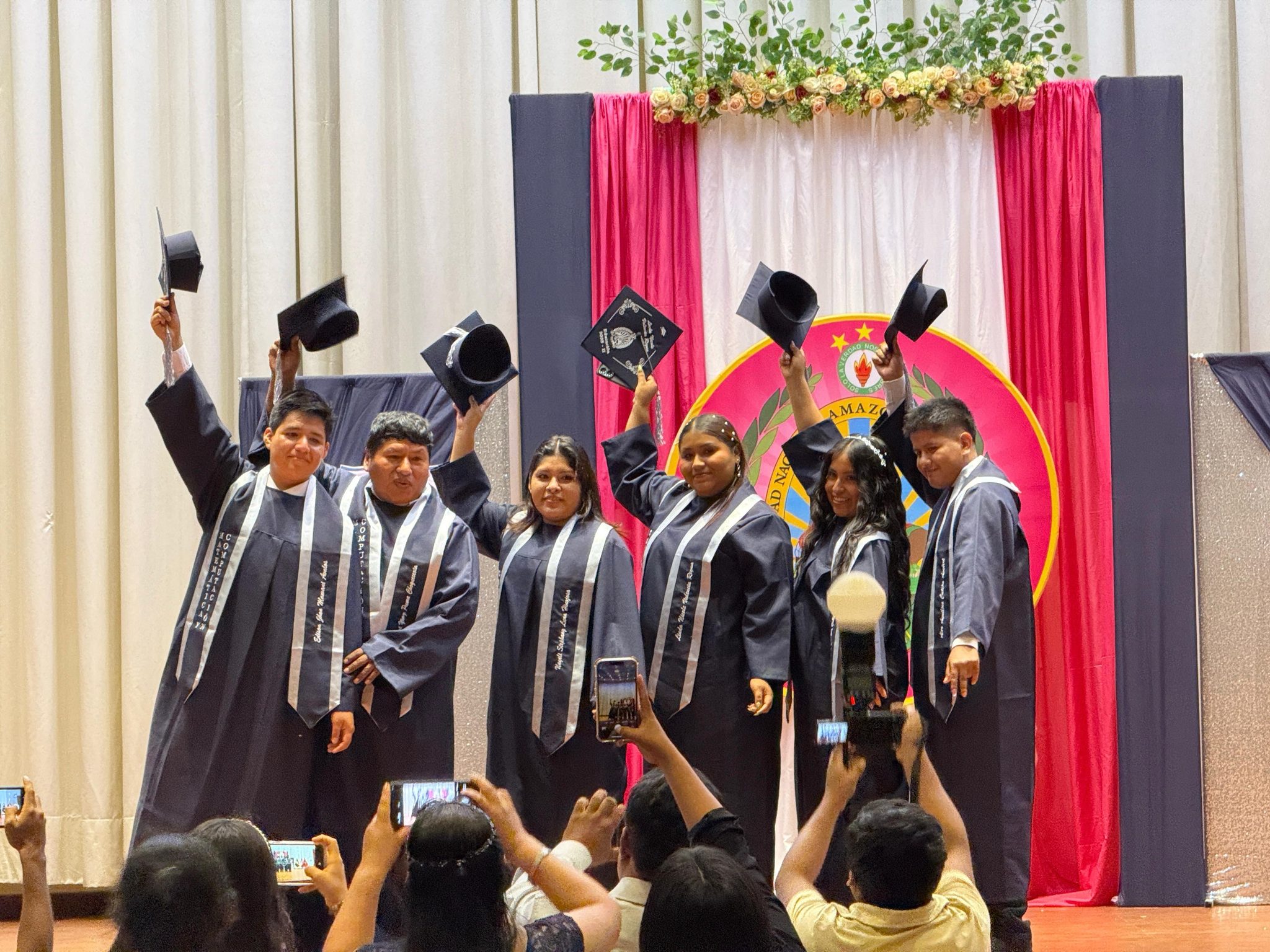
REDD+ Fellows Castañeros – Education as a Priority in the Amazon
Creating Opportunities for Future Generations At Bosques Amazónicos (BAM), we believe that conserving a forest also means investing in the people who protect it.…
-
 News
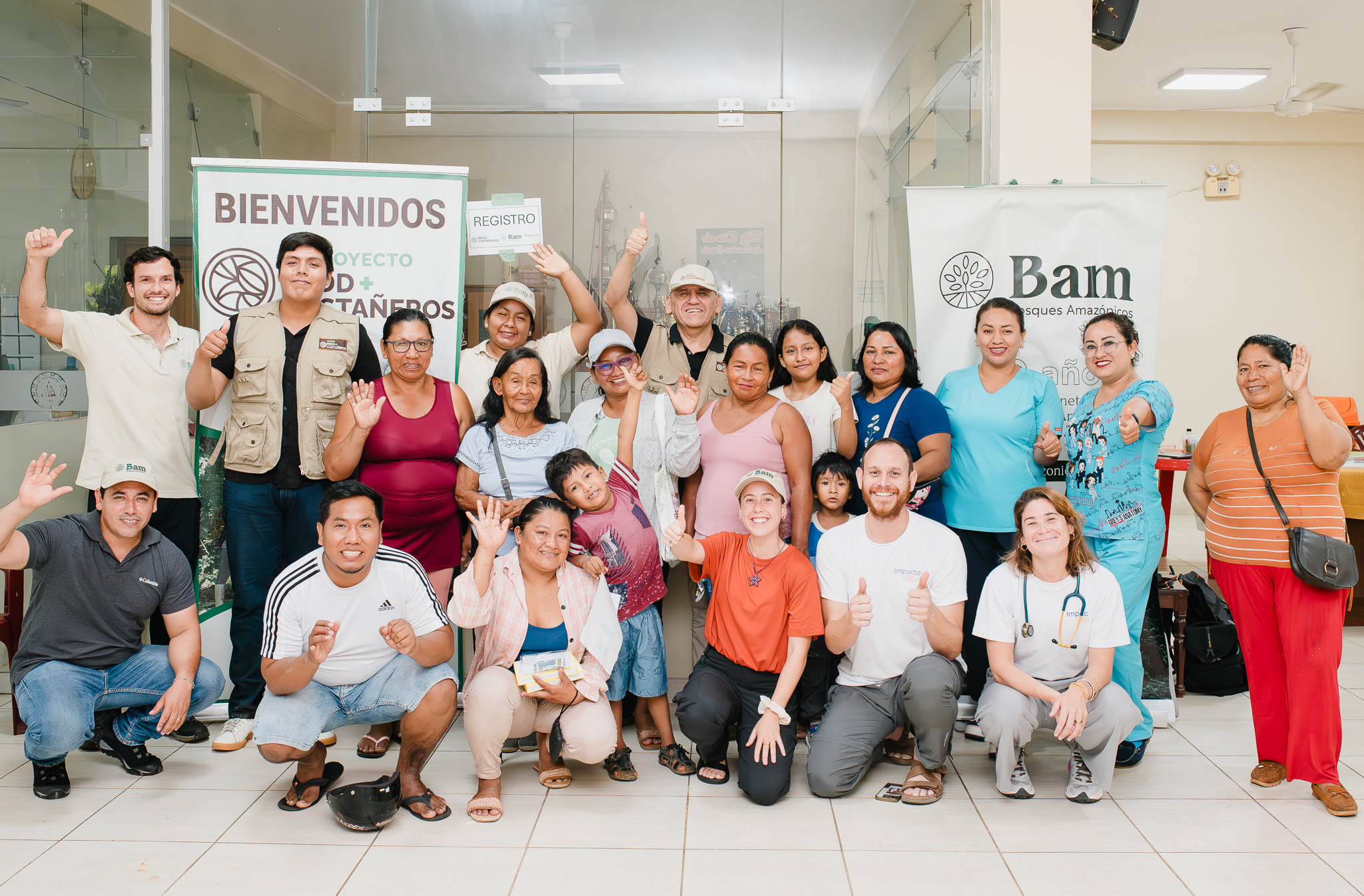
Carbon credits with REAL impact: 200 families benefited from the health campaign in REDD+ Castañeros
REDD+ Castañeros Madre de Dios is conducting a medical outreach campaign that benefits more than 200 families and demonstrates that carbon credits generate…