


Colombia Carbon Forum: What It Means for Peru's Carbon Market
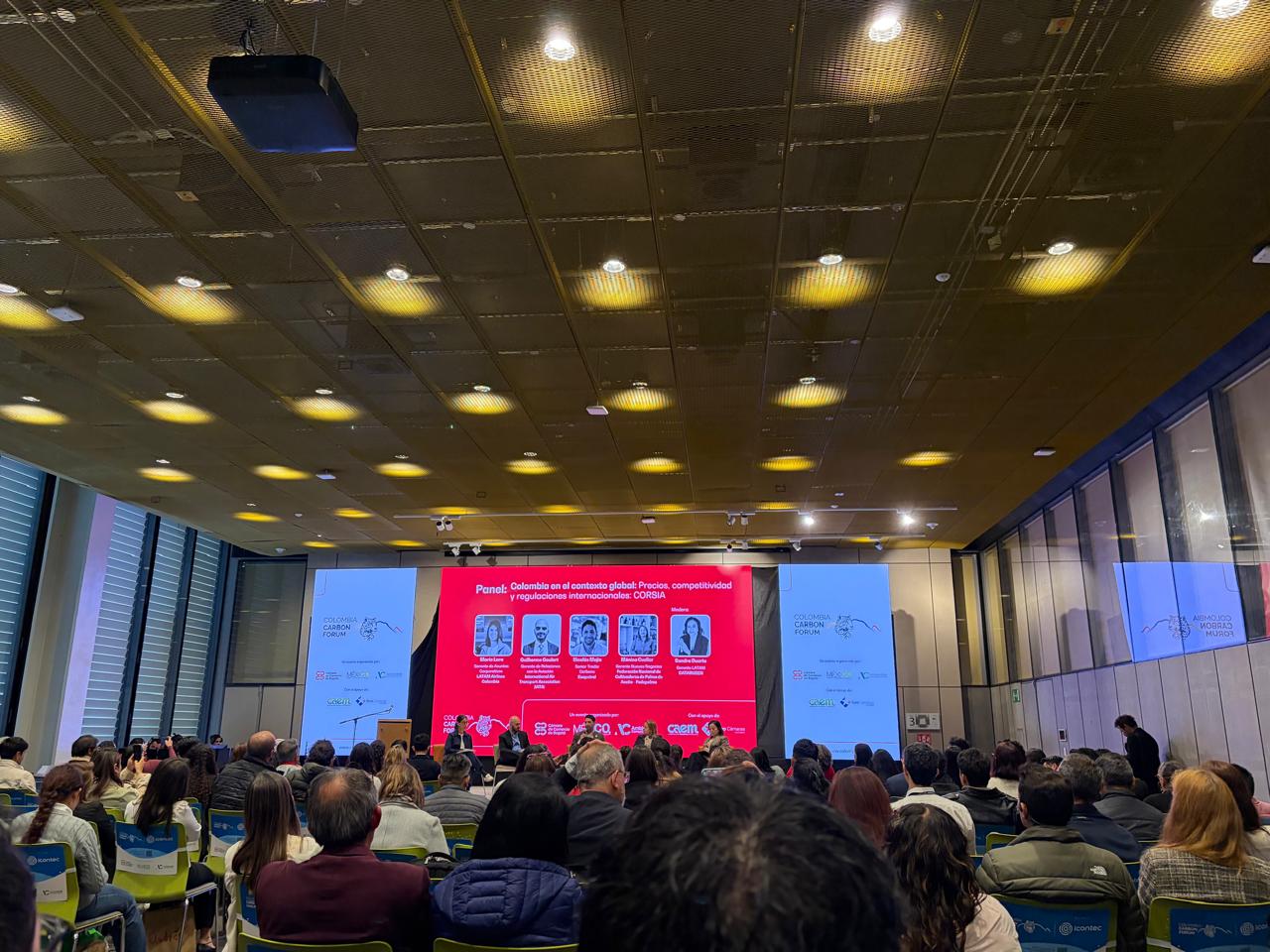
Participating in the Colombia Carbon Forumprovided a first-hand look at some of the key discussions currently shaping the evolution of carbon markets in Latin America. Beyond the Colombian context, the event offered important insights into how regional competitiveness is taking shape and what opportunities may arise for countries like Peru.
An evolving market, but one facing regulatory challenges
One of the most significant topics discussed at the forum was an analysis of the current state of Colombia’s voluntary carbon market and its level of preparedness with regard to Article 6 of the Paris Agreement. It was emphasized in several sessions that, although Colombia has made progress on general climate commitments, it still faces regulatory and institutional gaps that prevent it from establishing a clear path toward alignment with this international framework.
This raises a key issue for the region: going forward, countries’ competitiveness will depend not only on the number of projects or the volume of available credit, but also on their ability to provide traceability, transparency, and clear rules for participating in increasingly demanding international markets.
Article 6: An Agenda That Will Define Our Future Position
The debate surrounding Article 6 showed that national preparedness is not merely a technical matter, but a strategic prerequisite for accessing new market opportunities. Factors such as the authorization of international transfers, monitoring infrastructure, and institutional clarity will be crucial for a country to establish a strong position in this new landscape.
From this perspective, the regional context suggests that Peru could have a significant opportunity if it continues to strengthen its regulatory alignment and institutional capacity with respect to these mechanisms.


Market sophistication is already underway
Another key message from the event was that the carbon market is entering a phase of greater sophistication. It is no longer just about developing projects or issuing credits, but also about creating the conditions to reduce risks, attract investment, and facilitate high-quality transactions.
In this context, progress was reported in the following areas:
- assurance tools for carbon credits,
- specialized financial services to facilitate market access,
- and new mechanisms to improve trust and risk management.
This confirms that the market is evolving toward a more structured environment, where credit quality, legal certainty, and responsiveness to international buyers will become increasingly important.
Lessons from academia: Growth, yes—but with good governance
The forum discussions also included an academic perspective on the expansion of Colombia’s voluntary carbon market. Among the findings presented, it was noted that the market’s growth has made it possible to mobilize climate finance on a large scale, but has also revealed significant challenges related to regulatory gaps, asymmetries among stakeholders, governance weaknesses, and the unequal distribution of benefits.
The main lesson is clear: the market will only be able to establish itself as a genuine tool for climate action if it progresses alongside improved conditions for transparency, oversight, institutional strengthening, and local participation.
"The Colombia Carbon Forum confirmed that future carbon competitiveness will depend not only on supply, but also on traceability, regulation, and each country's preparedness," says María Fernanda López, MRV analyst at BAM.


CORSIA and the Window of Opportunity for Better-Prepared Countries
One of the most significant topics for the regional meeting was the discussion on CORSIA, the international emissions offsetting scheme for aviation.
The forum highlighted that countries that do not yet have a clear path to compliance with Article 6 face greater difficulties in placing eligible credits under these types of mechanisms. This situation affects several markets with a high concentration of projects, which, at the same time, opens a window of opportunity for countries that can demonstrate clearer regulatory progress and offer better eligibility conditions. In other words, the current scenario is not just about demand, but about who will actually be able to meet that demand under the new market rules.
Learn more about the projects at BAM here.
BAM, Nature Tech from the heart of the Amazon
Continue reading
-
 News
The Future of Forest Finance: From Conservation to Compliance
Nearly two decades ago, Jorge Cantuarias chose to conserve primary rainforest rather than convert it to farmland. Today, as Director and Founder of Bosques…
-
 News
2025 Bolivarian Games in partnership with REDD+ Castañeros : Sports & Sustainability
The 2025 Ayacucho–Lima Bolivarian Games will mark a milestone in sustainability for regional sports: the event will offset its carbon emissions through…
-
 News
Machu Picchu: A Carbon-Neutral Tourist Destination with REDD+ Castañeros from BAM
Machu Picchu, one of the Seven Wonders of the Modern World and a symbol of Peru's cultural heritage, received the certification for the third consecutive year…
-
 News
The Future of Forest Carbon: Innovation, Transparency, and Trust from the Amazon
In the global carbon market, trust has become the new currency. Today, more than ever, buyers demand traceability, integrity…
