


The Future of Forest Finance: From Conservation to Compliance

Nearly two decades ago, experienced economist Jorge Cantuarias made a choice that pivoted his career and transformed him into one of the guardians of the Peruvian rainforest. Today, as Director and Founder of Bosques Amazónicos (BAM), Jorge reflects on that moment and how, since then he has witnessed the evolution of carbon markets, community-first guardianship, and a transition toward regulated nature-based infrastructure.
A Choice: Where It All Began
In 2007, Jorge Cantuarias stood at a metaphorical crossroads. He held valid legal permits to convert an expanse of primary Peruvian Amazon rainforest into high-yield agricultural land, land that today is estimated to be worth approximately $70 million for commercial rice farming.
But the journey to that decision had actually begun three years earlier.
In 2004, Cantuarias and his team had encountered a complex challenge in the Peruvian Amazon. Agricultural clearing was contributing to rainforest loss, leaving behind vast areas of degraded, low-productivity pastureland. Cantuarias’ initial ambition was to restore the economic value of these lands by developing productive, sustainable agricultural alternatives. But as his understanding of the region and its challenges deepened, so too did his ambition, evolving into a long-term commitment to conserve primary rainforest.
So, when faced with a choice in 2007, Cantuarias chose carefully. Rather than clearing the canopy for short-term agricultural profits, he applied a rigorous business framework directly to ecological conservation, testing whether private capital could achieve sustained environmental protection while generating economic value.
“I was determined to demonstrate that rainforest conservation could become a genuine commercial success,” Cantuarias explains. “By committing to long-term stewardship of the ecosystem, we set out to prove that investors could achieve viable, lasting returns alongside verified ecological impact.”
That decision helped to establish BAM’s foundational philosophy: long-term guardianship backed by transparent, verifiable outcomes across the Peruvian Amazon. And since then, BAM has mobilised millions in private investment for social and environmental initiatives, establishing a model of forest stewardship that integrates local economic needs directly into natural resource protection.
Community Centred Guardianship: Addressing Root Drivers of Deforestation
A central takeaway from BAM’s two decades on the ground is that effective forest protection cannot rely exclusively on physical enforcement or policy mandates.
“In Peru, forest loss occurs largely through incremental clearings made by agricultural families striving to improve their living standards,” notes Cantuarias. “These actions stem from basic economic realities rather than corporate expansion.”
“That is why lasting rainforest guardianship must treat local communities as active economic partners,” he adds. “When local livelihoods are aligned with ecosystem preservation and patient capital, enduring conservation becomes achievable.”
One highly successful example of this community engagement is the REDD+ Castañeros (Brazil nut) programme in Madre de Dios, which BAM runs in partnership with the Federation of Amazon nut producers (FEPROCAMD). To date, this programme has protected over 600,000 hectares of primary forest by working alongside 700 local partner families.
By directing over US$10 million in carbon finance toward sustainable agroforestry, organic certification, processing infrastructure, and educational scholarships, the initiative has built alternative economic models that connect financial security directly to forest preservation.
Navigating the Transition to Regulated Compliance Markets
Parallel to BAM’s community engagement work in the forest, BAM has continually adapted to changing market standards and carbon accreditation frameworks too. Helping to secure financial stability for its conservation programs.
Historically, voluntary carbon markets faced pricing volatility and shifting methodological requirements. “Carbon markets are an essential mechanism, but technical debates over shifting standards must not distract from the primary objective: keeping forests standing and supporting local populations,” Cantuarias emphasises.
The market is now experiencing a new structural shift as forest carbon transitions toward regulated compliance frameworks under Article 6 international agreements. Through bilateral arrangements with nations including Singapore, South Korea, and Japan, Peruvian carbon credits are increasingly being incorporated into formal compliance frameworks.
For institutional partners, this evolution of regulatory frameworks will provide clearer asset security, refined valuation metrics, and long-term capital alignment beyond short-term transactional offsets.
And for institutional investors, such as those BAM tends to partner with, this shift could offer significantly higher value realisations, stronger asset security, and long-term capital alignment beyond single-year transactional offsetting.
This transition underscores the value of BAM’s foundational emphasis on audit readiness, rigorous monitoring, and verified real-world impact across its project portfolio.
And due to prior modelling on two decades of rigorous ground-truthing and audit readiness, BAM is now uniquely positioned to meet the stringent demands of regulated compliance markets today.
REDD+ The Last Habitat: Forest Finance for the Future
At the forefront of this regulatory evolution is BAM’s new flagship project, REDD+ The Last Habitat. Protecting 14,500 hectares of intact forest just 11 kilometres outside the rapidly expanding city of Pucallpa, the land stands as the sole remaining forest sanctuary in an urbanising landscape.
Partnering with top scientific institutions like the San Diego Zoo and Corbidi, BAM has verified the extraordinary biodiversity seen on site, with almost 1/3 of all species of Peruvian bird identified in the space the project covers. This, alongside newly discovered species of tree and frog too.
Crucially, REDD+ The Last Habitat embodies BAM's belief in long-term partnership over transactional buyers. BAM advocates for deep, strategic engagement with partners who truly understand the enduring value of forest conservation and the evolving landscape of regulated carbon markets. By looking beyond short-term transactions, these partnerships ensure sustainable, lasting opportunities for both the environment and the local communities who rely on it.
“In my opinion, true integrity isn’t just about ticking boxes against a constantly moving target of accreditation rules. It comes from a deep, long-term moral commitment to the land and the people who depend on it.” explains Cantuarias, making clear where BAM stands today.
Because having witnessed the difference BAM has made over the last 20 years, this is a man who has first-hand experience and can confirm that BAM will remain as anchored to the principle of Long-Term Guardianship and Verified Impact today as it will be in 20 years to come.
Continue reading
-
 News
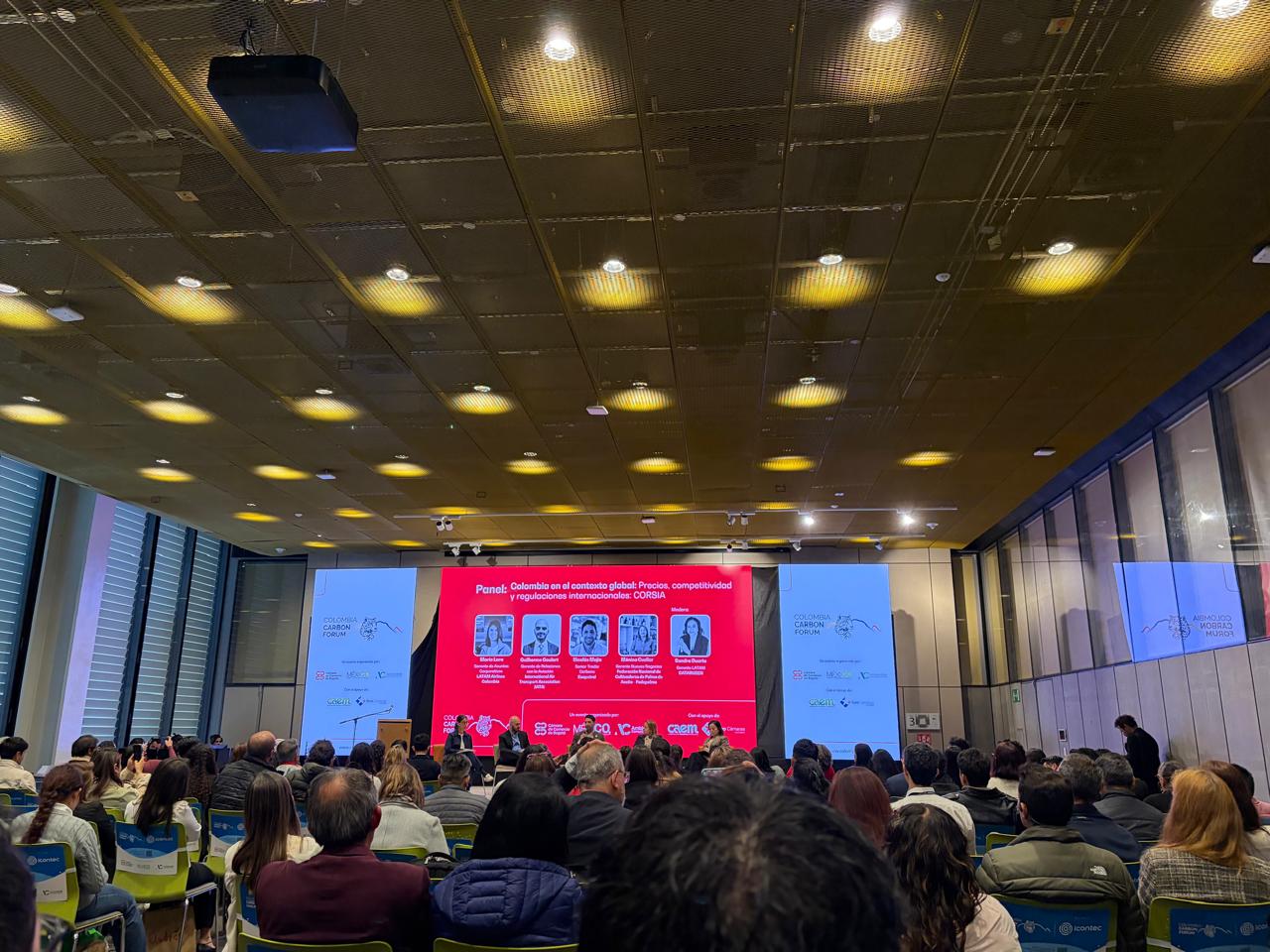
Colombia Carbon Forum: What It Means for Peru's Carbon Market
Participating in the Colombia Carbon Forum provided a firsthand look at some of the key discussions that are currently shaping the evolution of the markets…
-
 News
2025 Bolivarian Games in partnership with REDD+ Castañeros : Sports & Sustainability
The 2025 Ayacucho–Lima Bolivarian Games will mark a milestone in sustainability for regional sports: the event will offset its carbon emissions through…
-
 News
Machu Picchu: A Carbon-Neutral Tourist Destination with REDD+ Castañeros from BAM
Machu Picchu, one of the Seven Wonders of the Modern World and a symbol of Peru's cultural heritage, received the certification for the third consecutive year…
-
 News
The Future of Forest Carbon: Innovation, Transparency, and Trust from the Amazon
In the global carbon market, trust has become the new currency. Today, more than ever, buyers demand traceability, integrity…