


The Voluntary Carbon Market as a Strategy to Combat the Environmental Crisis

BAM 's business operations are closely linked to developments in the international environmental and timber sectors, as well as to the establishment of government and inter-institutional policies aimed at combating the global environmental crisis. In this regard, we provide a detailed analysis of the external dynamics that have been impacting the course of BAM's business operations.
Climate Change and the Importance of Developing Nature-Based Solutions to Combat the Environmental Crisis
“Climate change is real, and human activities—primarily the release of greenhouse gases from the burning of fossil fuels (coal, oil, and natural gas)—are the main cause.” – Fifth Assessment Report of the Intergovernmental Panel on Climate Change (IPCC).
This real emergency affects everyone in the world (ANCUR, 2021), and its noticeable effects are increasingly impacting a larger portion of the population, endangering society as a whole and our resources. Today, 30% of the world’s population is exposed to deadly heat waves for more than 20 days a year (UNEP, 2021, Fact Sheet). According to data from the European Union, between June and August 2023, we experienced the hottest summer on record, with a global average temperature of 16.77 degrees Celsius (62.19 Fahrenheit), according to Copernicus, 0.66 degrees Celsius above the 1990–2020 average, surpassing the previous record—set in August 2019—by nearly 0.3 degrees Celsius. (CNN, 2023); this is yet another sign of the climate emergency we are facing.
Nature can contribute up to one-third of the emissions reductions we need by 2030 to mitigate the worst effects of climate change. (The Nature Conservancy, 2023).
We are still a long way from achieving the goal of limiting global warming to well below 2, preferably 1.5 °C compared to pre-industrial levels, as agreed in Article 4 of the Paris Agreement, and to reduce greenhouse gas (GHG) emissions by 43% by 2030 and 60% by 2035 compared to 2019 levels (Global Compact, 2023). To achieve this, we must reduce global emissions by 7.6% annually between 2020 and 2030 (EGR, 2019).


Climate Summit: COP 28 and the Beginning of the End for Fossil Fuels
“The scale of decarbonization needed by 2030 is insurmountable unless we work together urgently to bend the emissions curve.” – Børge Brende, president of the World Economic Forum, in an open letter to world leaders at COP28. (The Nature Conservancy, 2023).
It is estimated that by 2030, the cost of damage and losses due to climate change will reach 400,000 million dollars (De Justicia, 2024). In line with this, one of the main agreements reached at COP28 in Dubai was to establish a “Loss and Damage Fund” managed by the World Bank for a period of four years, under which the wealthiest countries—which also have the greatest environmental impact—committed to providing financial assistance to the countries most affected by climate change, including Peru. In 2024, leaders will define the specific operational details of this fund, such as each country’s contribution, as well as the established payment, collection, and timeframes (The Nature Conservancy, 2023). Additionally, about 100 countries set a goal to triple renewable energy production by 2030 (BBC, 2023).
Dynamism in the carbon market and global demand projections
Following the growth of the voluntary carbon market (VCM) recorded in 2022, the global macroeconomic environment, coupled with methodological adjustments being implemented by standards bodies to strengthen the market, led to a slowdown in market decision-making in 2023, which impacted the prices of certified emission reductions, or Verified Carbon Units (VCUs), throughout the year.
However, a new wave of investment is currently emerging in the carbon market, spurring the development of more than 1,000 new carbon reduction projects—ranging from forest conservation to carbon capture and storage—and generating a growing flow of carbon credits that companies can use in their decarbonization efforts (MSCI, 2023).


A major study by Trove Research (2023) revealed that over the past two and a half years, more than 18,000 million dollars in investment capital has been raised for carbon credit funds. More than 80% of this funding goes to nature-based projects, such as afforestation and reforestation (ARR), and the reduction of emissions from deforestation and forest degradation (REDD+). Furthermore, the analysis revealed that, since 2020, more than 1,500 new carbon credit projects have been developed that could save up to 300 million metric tons of CO₂ annually (roughly equivalent to the United Kingdom’s annual emissions), representing an increase of about 160% in the registration rate compared to the 2012–2020 period (MSCI, 2023).
Furthermore, a study of the voluntary carbon market conducted by Ecosystem Marketplace (2023) showed that companies that use significant amounts of carbon credits are decarbonizing, on average, twice as fast as companies that do not use carbon credits (MSCI, 2023), demonstrating that the market incentivizes a real reduction in such emissions.
“The voluntary carbon market has the potential to invest billions of dollars in climate solutions over the next decade.” (Everland, 2023) (Harvard Business Review, 2023).
An MSCIreport (2023) titled “The Use of Carbon Credits to Meet Corporate Climate Goals” estimates that if companies are allowed to use carbon credits to cover 50% of their total emissions gap (Scopes 1, 2, and 3), about 1,000 more companies would be setting ambitious climate targets representing some $10 trillion in market capitalization.
According to Morgan Stanley, despite the complexity of the carbon market, it is projected to grow 50-fold in just a single decade, rising from nearly 2,000 million dollars in 2022 to nearly 100,000 million in 2030, and up to 250,000 million in 2050 (Harvard Business Review, 2023). These investments point to an optimistic future for the market and greater investment in projects that generate direct and indirect environmental and social benefits, specifically in the Amazon.
Despite the economic conditions in 2023, the carbon market proved remarkably resilient, and there is data to support this. One of the latest studies byMSCI Carbon Markets shows that in 2023, there was a 14% increase in the retirement of carbon credits from nature-based solutions compared to 2022, reaching 75,000 metric tons of retirements. This figure represents significant progress in the market and presents strong investment opportunities in high-impact, high-integrity projects to achieve the required goals. Over the past decade, it has become clear that environmental, social, and governance risks are financial risks (ESG and Financial Performance by MSCI, 2023), and we must take action to address them.
Projects with high integrity and transparency
Buyers are increasingly demanding high-integrity, high-impact carbon credits, seeking greater transparency and traceability in their offsets. As a result, existing integrity standards—specifically the Integrity Council for the Voluntary Carbon Market (ICVCM) and the Voluntary Carbon Market Integrity Initiative (VCMI)—gained popularity and were promoted throughout 2023. Aligning with their core principles has become a requirement, with the aim of ensuring that the market contributes effectively to meeting the goals set forth in the Paris Agreement. Additionally, there is a growing appreciation for projects that tangibly align with the United Nations Sustainable Development Goals (SDGs).
Learn more about how we at BAM help mitigate the effects of climate change and contribute to the sustainable development of our society here.


Written by: Valeria Drinot
Continue reading
-
 News
The Future of Forest Finance: From Conservation to Compliance
Nearly two decades ago, Jorge Cantuarias chose to conserve primary rainforest rather than convert it to farmland. Today, as Director and Founder of Bosques…
-
 News
The planet is getting warmer. What can we do about it?
The planet is getting warmer. And the consequences are becoming increasingly hard to ignore. This summer, heat waves, droughts, and…
-
 News
The Artisans of Inin Jabe: When Preservation Also Means Creating Opportunities
At the Bosques Amazónicos (BAM), we believe that conservation goes beyond protecting forests. It also means creating opportunities for the people who live…
-
 News
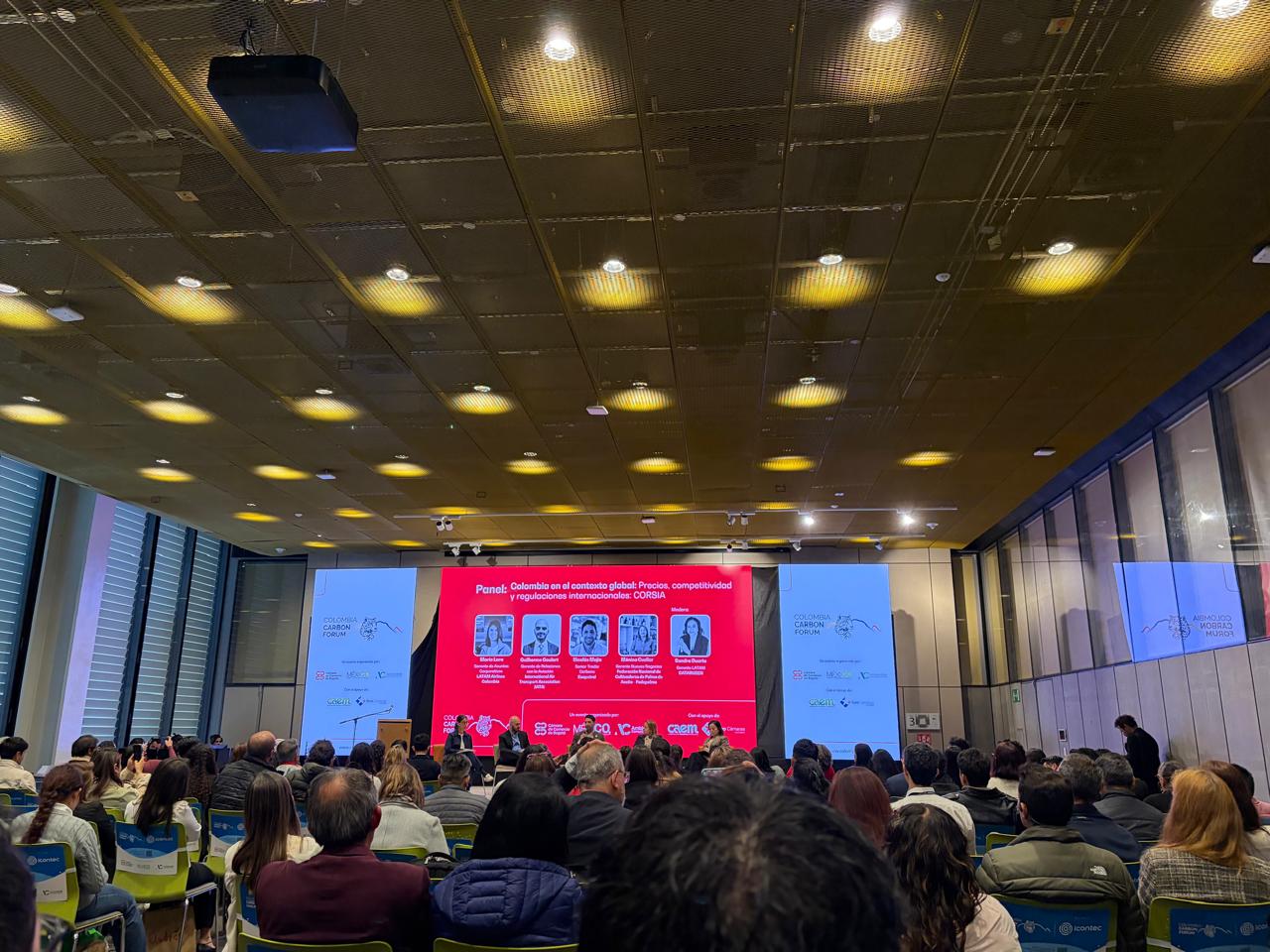
Colombia Carbon Forum: What It Means for Peru's Carbon Market
Participating in the Colombia Carbon Forum provided a firsthand look at some of the key discussions that are currently shaping the evolution of the markets…
