


The planet is getting warmer. What can we do about it?

The planet is getting warmer. And the consequences are becoming increasingly hard to ignore.
This summer, heat waves, droughts, and wildfires have once again affected the planet. Western Europe has experienced the hottest June and July on record, while wildfires have forced entire communities to flee their homes and destroyed hundreds of thousands of hectares.

These images may make climate change seem like an overwhelming challenge. But while the scale of the problem is enormous, it's not all bad news.
Setting aside the responsibility of various governments and the policies needed to accelerate climate action—which are part of a much broader conversation—it is important to understand what is happening, why, and, above all, what we can do about it.
The first thing we need to understand is that these phenomena do not occur in isolation.
Heat waves and wildfires are natural phenomena and have occurred throughout history. Climate change alone does not cause every extreme weather event. What global warming does, however, is alter the conditions under which these events occur.
As average temperatures rise, episodes of extreme heat may become more frequent and intense. Higher temperatures can also dry out vegetation and soil more quickly, creating conditions in which droughts can worsen and wildfires can spread more easily and reach greater intensity.
At the same time, natural climate cycles continue to influence the climate around the world. El Niño, for example, periodically causes certain areas of the tropical Pacific to warm and can significantly alter rainfall and temperature patterns thousands of kilometers away.
Climate change and natural climate variability are not, therefore, the same thing. But today, these natural phenomena are occurring on a planet that is already warmer.
So, what can we do?
Reducing greenhouse gas emissions remains essential. The transition to cleaner energy, more efficient transportation, lower-carbon industries, and more sustainable consumption patterns are all important elements.
But there is another part of the climate equation that sometimes receives less attention: protecting the natural systems we already have.


Forests are one of them.
Healthy forests absorb and store carbon, but their importance goes far beyond that. They regulate the water cycle, protect the soil, are home to extraordinary biodiversity, and support millions of people whose livelihoods depend on them.
When forests disappear, we don't just lose trees. We weaken an entire natural system.
This is especially important in places like the Amazon, where pressure from agriculture, infrastructure development, illegal activities, and changes in land use continue to threaten the forests that still remain standing.
That is why, for those of us who work on climate and nature, the question can no longer be simply: How do we reduce future emissions?


We must also ask ourselves: What can we protect today?
At BAM, we answer this question through our daily work in the Peruvian Amazon.
We work to protect standing forests, restore degraded ecosystems, and generate economic value by keeping nature alive. This includes developing transparent, evidence-based carbon projects capable of channeling climate finance toward forest conservation, combining science, technology, and long-term collaboration with local communities.
Climate finance does not replace the need to reduce emissions, just as forest conservation is not the only solution to climate change. There is no single solution.
But protecting the natural systems that help regulate our climate is an important part of the solution.
The images we are seeing are a powerful reminder of the magnitude and urgency of the challenge we face.
But they should also remind us that many of the tools we need already exist.
Nature is one of them.
And protecting it is something we can do today.
Continue reading
-
 News
The Artisans of Inin Jabe: When Preservation Also Means Creating Opportunities
At the Bosques Amazónicos (BAM), we believe that conservation goes beyond protecting forests. It also means creating opportunities for the people who live…
-
 News
REDD+ Fellows Castañeros – Education as a Priority in the Amazon
Creating Opportunities for Future Generations At Bosques Amazónicos (BAM), we believe that conserving a forest also means investing in the people who protect it.…
-
 News
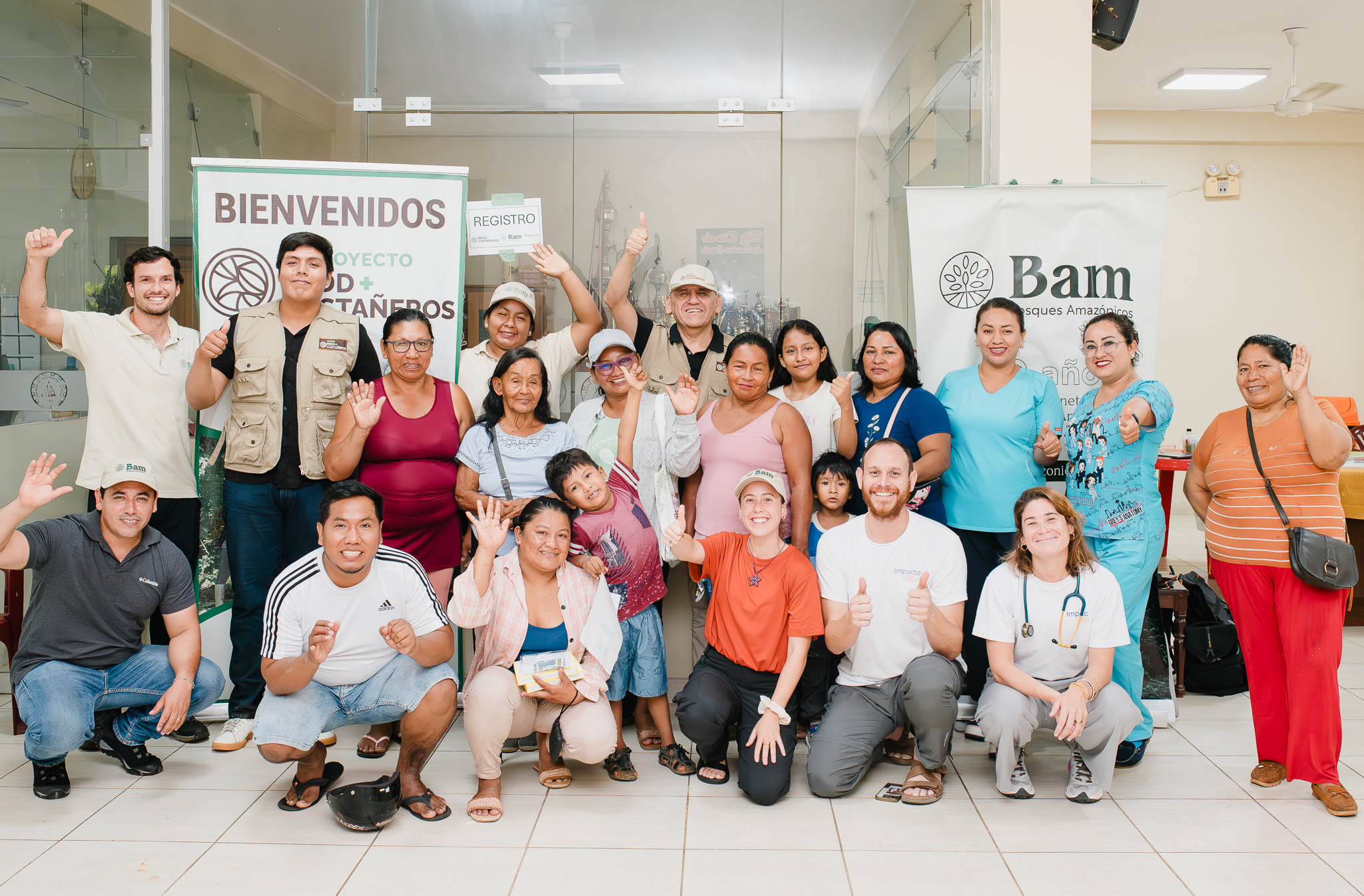
Carbon credits with REAL impact: 200 families benefited from the health campaign in REDD+ Castañeros
REDD+ Castañeros Madre de Dios is conducting a medical outreach campaign that benefits more than 200 families and demonstrates that carbon credits generate…
-
 News
REDD+ Castañeros remains firm and in effect, even in times of change
A Story of Success REDD+: After more than 15 years in operation, REDD+ Castañeros remains as committed as ever to improving quality of life…