


Biodiversity Assessment in the Forests of Nuevo Paraíso, Madre de Dios

March 2022
In line with our commitment to conservation, and as part of our Science Program, we conducted a new scientific assessment—this time in the Brazil nut forests located in Nuevo Paraíso, which are part of the area protected bythe conservation project REDD+ Castañeros developed by BAM at Madre de Dios.
This expedition was carried out in collaboration with expert researchers from the Natural History Museum of the University of San Marcos (UNMSM), as part of an agreement between BAM and UNMSM to promote scientific development in the Peruvian Amazon. This joint effort aims to promote scientific research and collaboratively conduct ongoing inventories of biological diversity, with an emphasis on communities, ecosystems, and species that are threatened and/or new to science. The project also received support from specialists in botany, ornithology (birds), mammalogy (mammals), entomology (insects), and herpetology (amphibians and reptiles).
As the rainy season came to an end and after 10 days of research, they discovered the great variety of wildlife and natural habitats found in our forests, yielding fascinating results and identifying threatened and/or endangered species.


According to Dr. Varun Swamy, a research scientist with the San Diego Zoo Wildlife Alliance, based on his more than 20 years of experience in the region, the site under evaluation is a“good representation of a primary forest and is home to a high diversity of species characteristic of the upper alluvial terraces of Madre de Dios.”
Mammal diversity was estimated at 38 species belonging to 19 families. The largest number of bat species identified were frugivorous (fruit-eaters), suggesting that the forest is in good condition, given that these species are key to seed dispersal and forest regeneration.
“The most notable sightings for the concession were the jaguar (Panthera onca) and the tapir (Tapirus terrestris), both of which are protected under Peruvian law and classified as “Near Threatened” and “Vulnerable,” respectively, according to the IUCN; therefore, these records suggest that the forest is in a favorable condition to support these species. In addition, six species of primates were recorded, along with deer and huanganas (wild pigs)—all species that indicate the forest’s good health within the concession.” Dr. Víctor Pacheco Torres, scientist in charge of mammalogy at the UNMSM Natural History Museum.


“The birds recorded suggest that species richness is relatively high given the type of forest visited. It is important to highlight the presence of the common curassow (Mitu tuberosum), which is classified as Near Threatened (NT) on both the IUCN Red List of Threatened Species and Peru’s Red Book of Threatened Species.” Dr. Letty Salinas Sánchez, lead ornithologist at the UNMSM Natural History Museum.


The expeditions conducted as part of the project REDD+ Castañeros aim to identify and assess the ecological value and importance of the ecosystems found in the Brazil nut forests of Madre de Dios, promoting their conservation in compliance with the international Verified Carbon Standard (VCS) and Climate Community and Biodiversity (CCB) standards.
Raising awareness about the importance of bosques amazónicos is essential to continuing to contribute to the conservation of and respect for biodiversity.

Text: Valeria Drinot
Photographs: Walter H. Wust
Continue reading
-
 News
The planet is getting warmer. What can we do about it?
The planet is getting warmer. And the consequences are becoming increasingly hard to ignore. This summer, heat waves, droughts, and…
-
 News
The Artisans of Inin Jabe: When Preservation Also Means Creating Opportunities
At the Bosques Amazónicos (BAM), we believe that conservation goes beyond protecting forests. It also means creating opportunities for the people who live…
-
 News
REDD+ Fellows Castañeros – Education as a Priority in the Amazon
Creating Opportunities for Future Generations At Bosques Amazónicos (BAM), we believe that conserving a forest also means investing in the people who protect it.…
-
 News
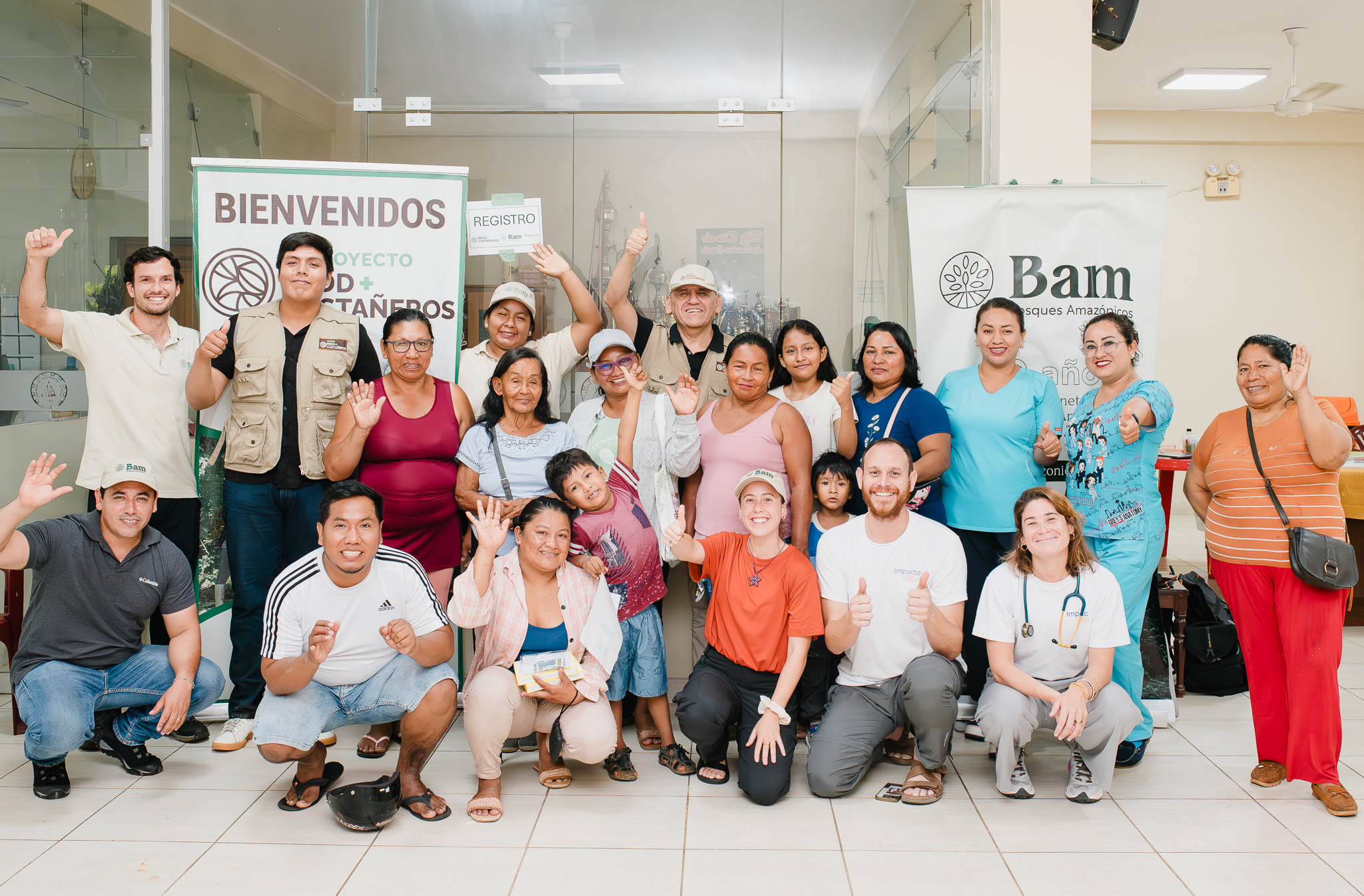
Carbon credits with REAL impact: 200 families benefited from the health campaign in REDD+ Castañeros
REDD+ Castañeros Madre de Dios is conducting a medical outreach campaign that benefits more than 200 families and demonstrates that carbon credits generate…