


We won a grant from Concytec to monitor the birds on our Campo Verde farm!

On July 22, we won Concytec’s ProCiencia competition, which provides funding for bird monitoring within our forest plantations and protected forests as part of the “ REDD+ : El Último Hábitat” conservation project on the Campo Verde estate, Ucayali, Peru.
Did you know that Peru is one of the 12 megadiverse countries and ranks as the world leader in terms of bird diversity? (MINAM, 2024).
Details on Bird Monitoring
This project will assess the composition of bird diversity based on forest structural variables as a foundation for a better understanding and the formulation of a theoretical framework for biodiversity: detailed measurement of the structure of bird communities in one-square-kilometer plots in a young forest plantation, a mature forest plantation, and a natural forest in the Central Jungle, and comparison with published data from an equivalent plot in a forest in southern Peru.


Project Summary
One of the main challenges in tropical ecology with regard to biodiversity is documenting and understanding spatiotemporal patterns in highly diverse communities, such as those in the Amazon. This is necessary, among other reasons, to anticipate the consequences of human impact on these areas. This is essential for forest management, as well as in the current alarming scenario of global warming, where changes in communities attributable to this slight increase in ambient temperature have already been documented.
This study proposes a detailed assessment of bird communities within plots at the largest possible scale, while still allowing for the level of detail typically found only in smaller plots. The sampling scale is based on an extraordinary and unprecedented intensive sampling effort conducted in 1983 in the heart of the Manu by an elite bird identification team on a 1 km² plot. In 2019, with far more resources and tools at their disposal, the effort was repeated 36 years later by a team that included the technical lead and a co-investigator of this project, as well as two authors of the original study. The team sought primarily to identify patterns of temporal change and found that the structure and composition of the bird communities had changed little despite the passage of time.


The same 1 km² plot scale will be used to provide a detailed description of three bird communities and to analyze differences in their composition and structure in relation to forest characteristics associated with management: one plot in a recent forest plantation (less than 5 years old), one in a plantation approximately 10 years old, and one in a mature forest.
This intensive and detailed survey allows us to address questions related to community ecology, such as: Does the population structure follow basic principles applicable to all three treatments? Can a progression be identified in this forest growth succession?
Implementing Entities
The research will be conducted on the BAM farm at Ucayali in collaboration with the National Agrarian University of La Molina, California State University, Long Beach (U.S.), and Casper College, Wyoming (U.S.).

More about our farm Campo Verde
BAM 's private property at Campo Verde, located 45 minutes from the city of Pucallpa, protects more than 25,000 hectares where we are carrying out a forest conservation project called REDD+ El Último Hábitat and a restoration and reforestation project using native species such as marupa and shihuahuaco.
Our project , “REDD+ : El Último Hábitat , ” spans over 20,000 hectares of protected megadiverse forests, indirectly benefits more than 835 families in surrounding communities, and protects more than 600 extraordinary species —some of which are endangered or vulnerable, such as the jaguar, the sachavaca, and the maquisapa monkey. Within the area, there are more than 5,000 hectares of aguajales—among the ecosystems with the highest carbon sequestration capacity in the world.
Learn more about how you can join our mission to protect the Peruvian Amazon, and email us at info@bosques-amazonicos.com
BAM, private investment for a sustainable world.
By: Valeria Drinot and Walter Wust
Continue reading
-
 News
The planet is getting warmer. What can we do about it?
The planet is getting warmer. And the consequences are becoming increasingly hard to ignore. This summer, heat waves, droughts, and…
-
 News
The Artisans of Inin Jabe: When Preservation Also Means Creating Opportunities
At the Bosques Amazónicos (BAM), we believe that conservation goes beyond protecting forests. It also means creating opportunities for the people who live…
-
 News
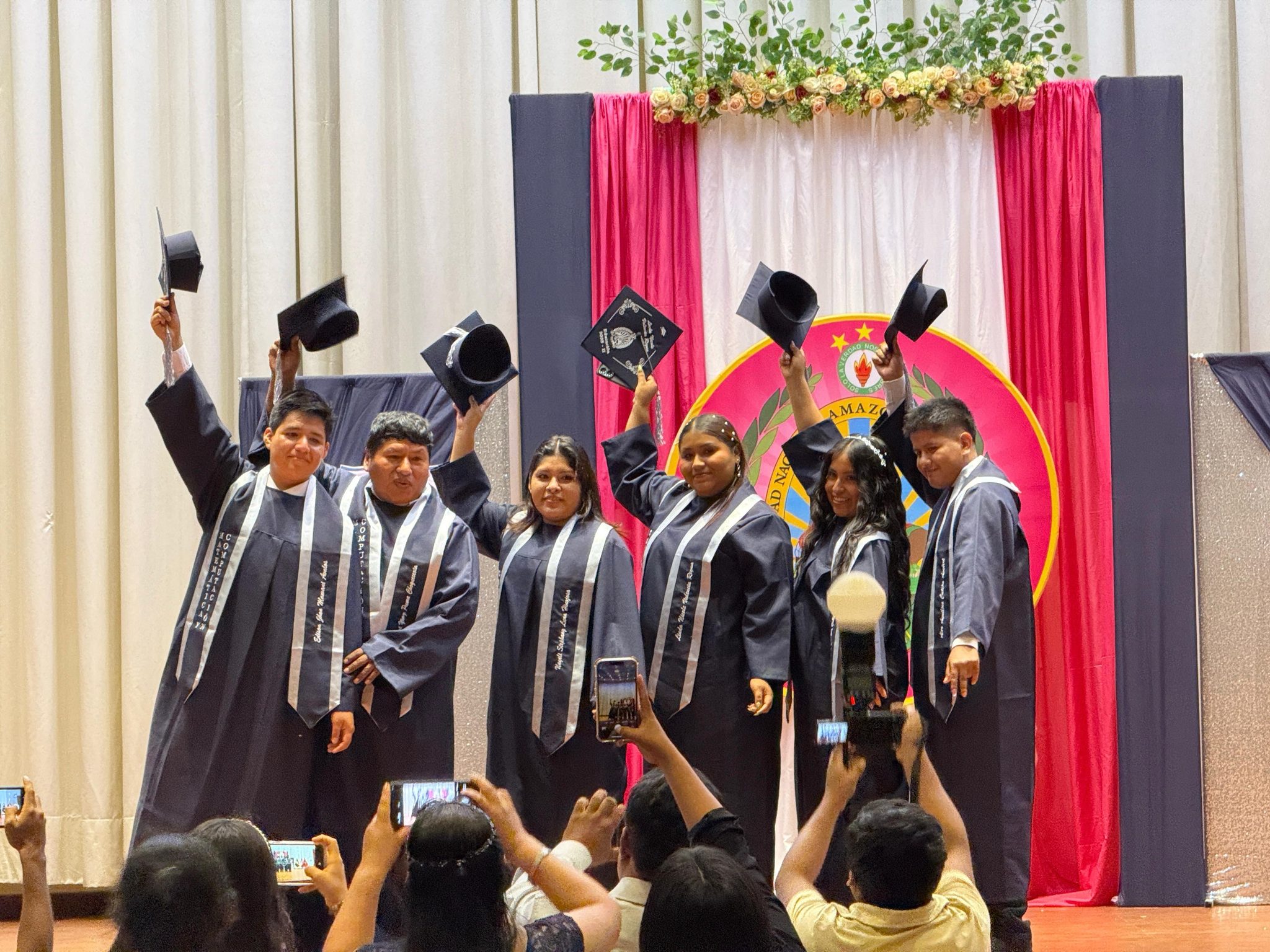
REDD+ Fellows Castañeros – Education as a Priority in the Amazon
Creating Opportunities for Future Generations At Bosques Amazónicos (BAM), we believe that conserving a forest also means investing in the people who protect it.…
-
 News
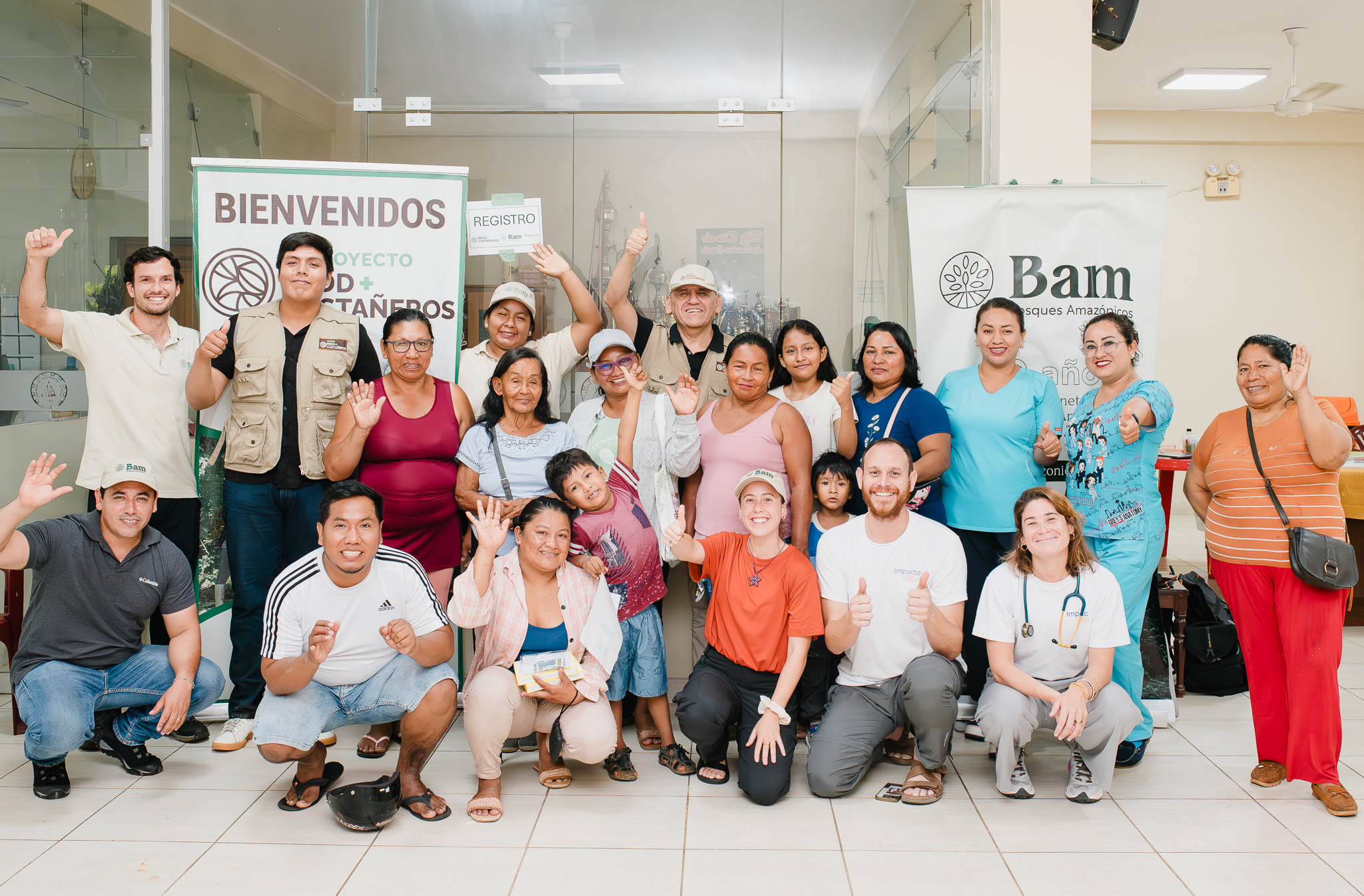
Carbon credits with REAL impact: 200 families benefited from the health campaign in REDD+ Castañeros
REDD+ Castañeros Madre de Dios is conducting a medical outreach campaign that benefits more than 200 families and demonstrates that carbon credits generate…