


Jorge Cantuarias and Bosques Amazónicos: Building a Sustainable Future in the Peruvian Amazon

The Amazon, with its vast biodiversity and vegetation, is one of the most precious ecosystems on our planet. However, it has also been a victim of deforestation and unsustainable exploitation over the years. Amid this challenge stands Bosques Amazónicos (BAM), a company that not only strives to restore the biodiversity and ecosystems of the Peruvian rainforest but also works with great determination and dedication to build a sustainable future in the region.
As we continue on this journey, alongside the General Manager of BAM, Jorge Cantuarias, we’ll uncover the innovative strategies that have guided the company’s development BAM and how the company has overcome obstacles to achieve the growth it enjoys today. From financing to technology and community engagement, we’ll unpack the pillars upon which the company’s strategy is based BAM. In addition, we’ll delve into the company’s approach to corporate social responsibility and community development, highlighting its commitment to the people and ecosystems surrounding its projects in the Amazon.


Tell us how " BAM" got started. What is its purpose and vision?
I had the opportunity to visit the Central Jungle—specifically the city of Pucallpa —in the 1990s, due to various activities I was involved in at the time, and I witnessed a reality that, unfortunately, continues to this day. A reality where you see vast areas of pastureland or completely deforested areas that have lost their economic value. At that time, the country was emerging from a very politically turbulent period, which made the situation even more serious. Faced with this situation, the idea arose to try to restore the economic and productive value of those areas. So, we launched a small pilot project at the time, which was funded by International Cooperation, the Fund of the Americas—specifically, the Regional Government of Peru—which, even back then, understood that it was unacceptable for us to be in such a situation. In other words, vast areas that served no productive purpose and had completely lost their economic value.
How have these projects evolved over the years? As pioneers in a market that was underdeveloped or virtually nonexistent, what are the main obstacles that BAM has overcome during this time to achieve the growth it enjoys today?
 The main one barrier What became evident very quickly was the financial. We started this reforestation pilot project using native species in Campo Verde and we saw excellent results very quickly, so when we wanted to replicate the project and, obviously, expand the areas we had begun to reforest, we were faced with the sad reality that there was no financing available in Peru. Clearly, the banks lacked the expertise, the International Cooperation It typically funds early-stage projects or initiatives, but not large-scale ones like the ones we were looking for, and that was the first obstacle. The carbon market—which ultimately served as the driving force that enabled us to begin growing BAM and brought us to where we are today—did not yet exist.
What innovative strategies or approaches has BAM been using to ensure the long-term sustainability of its projects?
We are convinced that any kind of development must involve the neighbors, the community, and the people living near the project, and that is what we have been doing in all our projects. We work closely with local people on issues such as Campo Verde: the hamlets, the neighbors. We’re constantly carrying out projects and transferring technology with them so they can see that a company’s development must truly benefit well-being to the communities surrounding the projects. And the same is true of the project we have in Madre de Dios: REDD+ Castañeros, which is a very large project where we currently protect nearly half a million hectares. It’s a flagship project for us—and I’d say for the country as well—because we got involved at a very early stage in the development of the carbon market, and yet we have managed to remain united for 15 years. Today, with a more developed market, we are seeing the results—not only from having protected an area so important for its valuable biodiversity, but also because we are seeing improvements in the quality of life of our project partners in the project.
Now that you bring up the topic of technology: How has it been implemented, for example, in the BAM Science Program or in the Forest Genetic Improvement Program?
The great value of the reforestation project at Campo Verde is that we have genetic material that is nearly 20 years old, sourced from various locations in the Peruvian Amazon. Today, we have launched a Forest Genetic Improvement Program with guidance from both local and international experts (including the Technological Institute of Costa Rica — TEC). We are producing the first clones of species such as shihuahuaco, marupa, and mahogany—trees that have been selected from the millions we planted. This represents a very significant technological advancement that we hope will revolutionize the forestry sector—specifically the field of reforestation with native species.


Moving on a bit more to the topic of community: Could you share with us some more specific examples of corporate social responsibility and community development initiatives carried out by BAM?
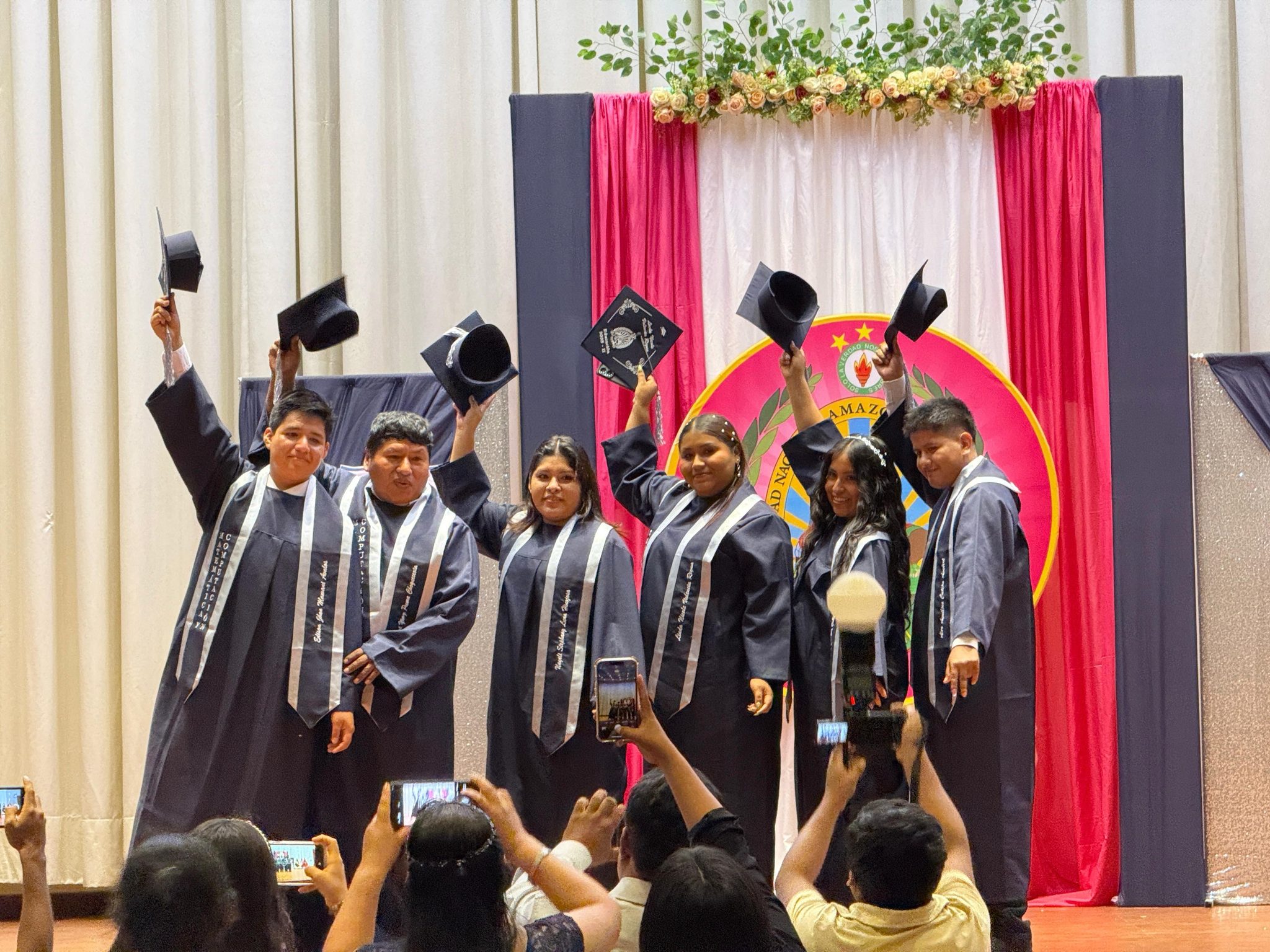
At Madre de Dios , we are seeking to transfer the reforestation technology we have developed through our years of experience. We are currently working on a project to enrich forests with Brazil nut (project REDD+ Castañeros), which is also very interesting, and all of this is aimed at improving quality—that is the life’s purpose of our partners. For example, one very innovative initiative we’re undertaking is a Scholarship Program for our members’ children and grandchildren (castañeros), which we should be launching soon—and we’re very excited about it—because it will also help develop human capabilities, which are ultimately what drive major change.


What are the current goals, prospects, and vision for the future of BAM in terms of expanding its projects and contributing to conservation in the Amazon region?
We must understand that, from the perspective of BAM, it is impossible to achieve the goals the world has set for itself in terms of combating greenhouse gasesunless the forestry sector is involved. This sector accounts for about 20% of emissions (of greenhouse gases)—we know this; it’s a proven fact. Forests are being lost, and we often ask ourselves: How are they being lost? They’re being burned. And this results in a direct emission ofCO2 into the environment. Therefore, all efforts the world makes to achieve its emissions-reduction goals must include the forestry sector as part of the strategy.
In the same vein, even though the credits generated by the forestry sector are still traded on the voluntary carbon market, we are convinced that, over time, significant economic benefits will result, along with—obviously—improved domestic capabilities, such as involving the government and the Ministry of the Environment, and the entire technical sector—which is highly developed in Peru—we will be able to successfully market credits from Peru’s forestry sector. Above all, because we already have an advantage over other countries, and that will allow us to generate revenue to sustain these conservation projects and develop the towns and communities that depend on the forests for their livelihoods—communities that are, ultimately, the greatest defenders of our forests. That’s on the carbon side.
When it comes to sustainability, we need to be aware that we cannot afford to lose this extraordinary biodiversity found in the “ bosques amazónicos ,” and that it is the responsibility of society and the world to preserve them—and there is no way to preserve them, I repeat, if we do not also succeed in developing the communities that are the great guardians of the Peruvian Amazon.
Could you give us a sneak peek at what's in store for 2024?
We are very excited about the expansion of our projects in the areas where we already operate, and we are also launching a project with indigenous communities in Loreto. This is the first time a private company like ours has partnered with indigenous communities. Right now, as we speak, a team is BAM is working with community leaders to explain what a conservation project REDD+, how they’re managed, and what the carbon credit market, among other topics. Our top priority is to ensure that they fully understand what this is all about and that these are long-term commitments.


A very clear example is what has happened with the project REDD+ Castañeros : 15 years later , we remain united, stronger than ever. We’ve increased— almost doubled — the area we conserve at Madre de Dios, and this isn’t that difficult. It’s about communicating effectively, laying everything out on the table from day one, and ensuring that agreements are honored. And that’s exactly what we plan to do with our upcoming projects. So soon we’ll be launching our first conservation project REDD+ with indigenous communities.
BAM
The story of BAM is an inspiring testament to how an idea, born amid challenges and adversity, can blossom into a movement that embraces sustainability and positive change. From its beginnings to its current achievements, BAM it has demonstrated that restoring the rainforest and building a sustainable future are achievable goals. Its focus on community, technology, and corporate social responsibility reminds us that conservation is not just about protecting the environment, but also about empowering the people who depend on it. With its sights set on the future, BAM will continue to forge a path that seeks not only to preserve the Amazon but also to enrich it and ensure its lasting prosperity.

More about BAM
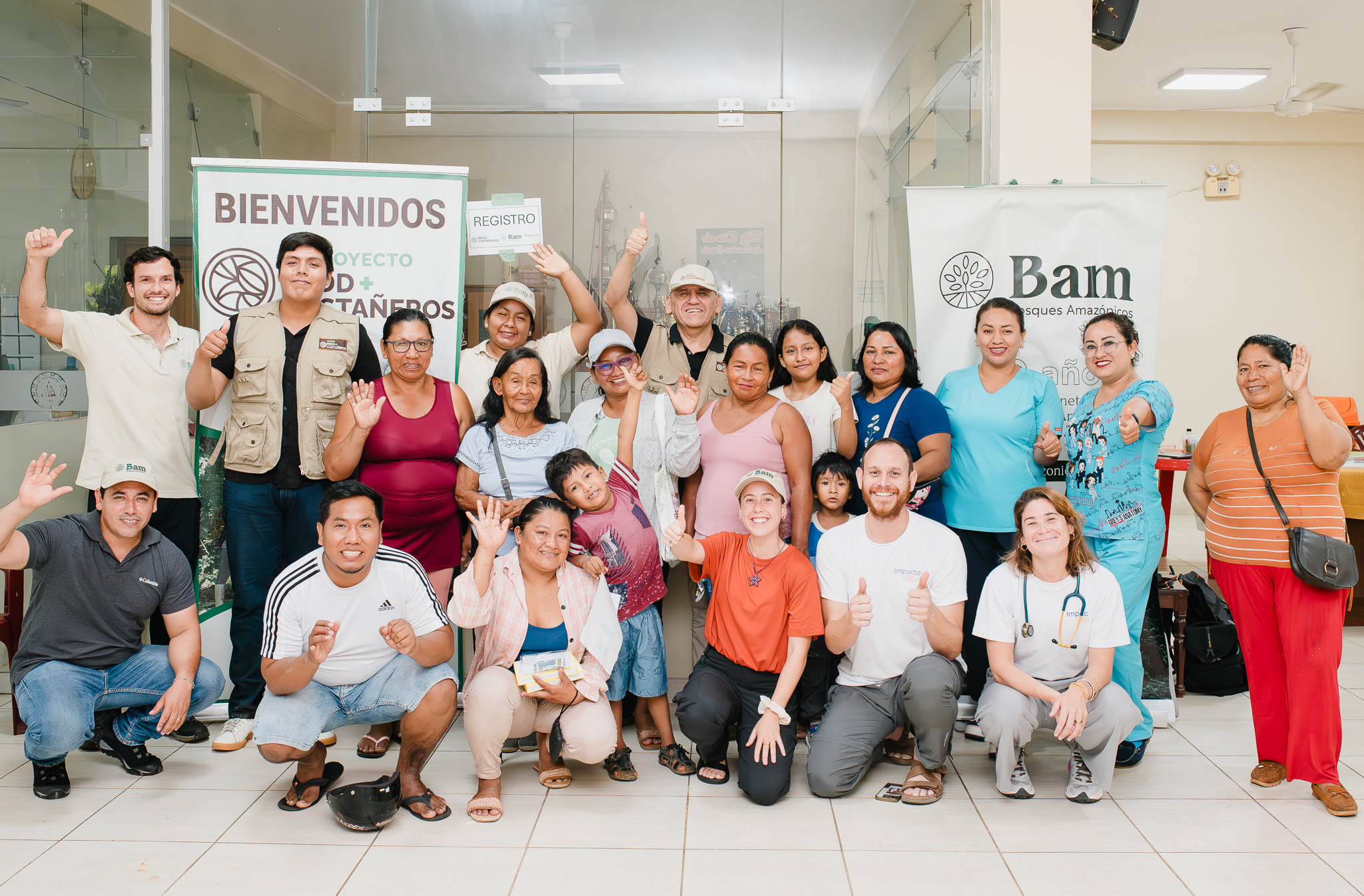
The conservation project REDD+ Castañeros developed by BAM works hand in hand with more than 700 member Brazil nut-growing families in Madre de Dios to protect more than 500,000 hectares of forests and their extraordinary biodiversity.
Join the fight against climate change and become part of the community by Bosques Amazónicos by clicking here.
BAM, private investment for a sustainable world.


Interviews section:
Check out Jorge Cantuarias' interview with Aldo Carlos, host of "PRO con la Naturaleza," here.
Check out the interview with Walter Wust, Director of BAM and Science Program Leader at BAM here.
Continue reading
-
 News
The planet is getting warmer. What can we do about it?
The planet is getting warmer. And the consequences are becoming increasingly hard to ignore. This summer, heat waves, droughts, and…
-
 News
The Artisans of Inin Jabe: When Preservation Also Means Creating Opportunities
At the Bosques Amazónicos (BAM), we believe that conservation goes beyond protecting forests. It also means creating opportunities for the people who live…
-
 News
REDD+ Fellows Castañeros – Education as a Priority in the Amazon
Creating Opportunities for Future Generations At Bosques Amazónicos (BAM), we believe that conserving a forest also means investing in the people who protect it.…
-
 News
Carbon credits with REAL impact: 200 families benefited from the health campaign in REDD+ Castañeros
REDD+ Castañeros Madre de Dios is conducting a medical outreach campaign that benefits more than 200 families and demonstrates that carbon credits generate…