


Machu Picchu: The world's first "carbon-neutral" wonder offsets its emissions through our project REDD+ Castañeros

Machu Picchu has become the first wonder of the world to achieve“Carbon Neutral” certificationby offsetting its emissions (tCO2e) through our project REDD+ Castañeros .
Machu Picchu achieved “Carbon Neutral” certification, becoming the first Wonder of the Modern World to earn this important recognition. To achieve this goal, a series of sustainable initiatives have been implemented since 2016 to reduce emissions at the historic site by 45% by 2030 and reach the goalofZERO emissions by 2050, in accordance with the guidelines of the Paris Agreement. This is an extraordinary joint effort between the public and private sectors, led by the Municipality of Machu Picchu, the National Service of Protected Natural Areas (Sernanp), Inkaterra, the Aje Group, Green Initiative, and others.
In line with this commitment to sustainability, Machu Picchu offset the emissions from its operations (carbon footprint) through carbon credits generated by our project REDD+ Castañeros. On this occasion, a total of 2,155 metric tons of carbon (tCO2e) was offset thanks to the conservation project developed BAM in partnership with more than 560 families in Madre de Dios.
“Through our operations, we are able to mitigate and reduce the amount of toxic gases released into the atmosphere as a result of deforestation, degradation, and fragmentation of our most valuable ecosystems. In this way, we generate carbon credits that allow us to offset emissions from other human activities. This is the very cause that brings us together today, and we are very proud and grateful to be a part of it,” said Jorge Cantuarias, General Manager of BAM.


The certification ceremony took place on September 2 at Machu Picchu and was attended by representatives from each organization involved in this important initiative: Mariano Castro, Deputy Minister of Environmental Management at the Ministry of the Environment (MINAM); Darwin Baca, Mayor of Machu Picchu; Pedro Gamboa, Head of Sernanp; Jorge López-Dóriga, Global Director of Communications and Sustainability for the AJE Group; José Koechlin, Founder of Inkaterra; Luciana Visnevski, Director of Green Initiative; Jorge Cantuarias, Founder and General Manager of BAM; among others.
During the event, Mariano Castro, Deputy Minister of Environmental Management(MINAM), emphasized the importance of addressing the climate crisis and our responsibility to “achieve national and local goals to become carbon-neutral economies.”
“I would like to congratulate the District Municipality of Machu Picchu and all the organizations that have participated in this initiative—such as SERNANP, Inkaterra, Grupo Aje, and Green Initiative—for helping our beloved Machu Picchu become the world’s first Carbon-Neutral Wonder. “This extraordinary effort is a source of pride for all Peruvians and an example of commitment to the environment on a global scale, ”said Jorge Cantuarias during the event.


Among the most significant initiatives undertaken at Machu Picchu to promote environmental sustainability are the installation of two plastic waste compactors, each capable of processing 7 metric tons of PET waste per day; the installation of a biodiesel plant, which prevents 1,000 gallons of used vegetable oil from entering the Vilcanota River; and the commissioning of an organic waste pyrolyzer, which processes organic waste at high temperatures to produce biochar, thereby preventing the emission of greenhouse gases (methane and carbon dioxide). The biochar produced is used by the community as fertilizer and by Sernanp in its reforestation efforts within the sanctuary. Finally, a glass crusher produces sand from crushed glass, thereby reducing the need to extract sand from the banks of the Vilcanota River and thus mitigating erosion around Machu Picchu Pueblo.
More about our conservation project REDD+ Castañeros :
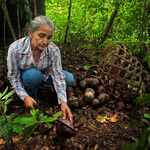
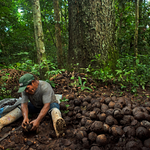
- To address the growing problem of deforestation in Madre de Dios, Bosques Amazónicos (BAM) and more than 560 families organized under the Federation of Brazil Nut Producers of Madre de Dios (FEPROCAMD) have been working in partnership since 2009 to protect 450,000 hectares of threatened forests. Thus, for more than a decade, REDD+ Castañeros has prevented the deforestation of over 28,000 hectares of Amazonian forests, protected 320 million trees, and prevented the emission of over 18 million metric tons ofCO2 to date, directly contributing to mitigating the effects of climate change.
- REDD+ Castañeros also plans to prevent the emission of more than 42 million tCO2e into the atmosphere between 2021 and 2040.
- The area protected by the project REDD+ Castañeros covers 450,000 ha, an area larger than Mexico City and similar in size to the city of São Paulo, Brazil.
- REDD+ Castañeros It has been one of the first projects in the world to be validated under the VCS standard, the most prestigious standard in the global voluntary carbon market.




By: Valeria Drinot
Continue reading
-
 News
The Future of Forest Finance: From Conservation to Compliance
Nearly two decades ago, Jorge Cantuarias chose to conserve primary rainforest rather than convert it to farmland. Today, as Director and Founder of Bosques…
-
 News
Colombia Carbon Forum: What It Means for Peru's Carbon Market
Participating in the Colombia Carbon Forum provided a firsthand look at some of the key discussions that are currently shaping the evolution of the markets…
-
 News
2025 Bolivarian Games in partnership with REDD+ Castañeros : Sports & Sustainability
The 2025 Ayacucho–Lima Bolivarian Games will mark a milestone in sustainability for regional sports: the event will offset its carbon emissions through…
-
 News
Machu Picchu: A Carbon-Neutral Tourist Destination with REDD+ Castañeros from BAM
Machu Picchu, one of the Seven Wonders of the Modern World and a symbol of Peru's cultural heritage, received the certification for the third consecutive year…
