


Monitoring, Control, and Surveillance System for the Conservation of Brazil nut Forests

In line with the goal of preventing deforestation in the forests of Madre de Dios (Peru) and as part of the activities carried out by the conservation project REDD+ Castañeros, the technical team is implementing a robust Monitoring, Control, and Surveillance System (SMCV) as an integral part of its conservation approach. This system operates, among other things, by utilizing information from official and reliable sources such as GEOBOSQUES and the NASA, with the aim of identifying and mitigating the threats of deforestation within the project area and surrounding areas of the Brazil nut-growing communities. It should be noted that the monitoring system is complemented by preventive measures to minimize threats in the area, such as ongoing training for concessionaires, community awareness workshops, and the promotion of sustainable economic alternatives, among others.
How the System Works
1. Identification of the threat
The process begins with an analysis of geospatial dynamics within the project’s area of influence, using official data from sources such as GEOBOSQUESand NASA.
Our team of specialists reviews and processes, on a daily basis, potential deforestation alerts and hotspots indicating forest loss detected in the forest concessions that are part of REDD+ Castañeros and their surrounding areas. These alerts are shared via phone and apps such asWhatsAppwithconcession partners, fosteringcollaboration and a rapid response to them. As will be detailed later, threats are assessed and properly addressed by the project’s technical team in the field.
In addition, in order toidentifyany risks in the area and takeimmediate action, the concessionaires themselves have been trained to promptly report possible incidents of deforestation and/or degradation in their areas, using technological tools that incorporate coordinates and satellite data, such as the NoteCam. It is worth noting that the technical team at REDD+ Castañeros providestraining workshops and ongoing guidanceto concessionaires on the use of mobile applications, tools, and forest monitoring processes.


2. Field Evaluation
Once the threats have been identified, the technical team at REDD+ Castañeros conductstechnical assessments of theaffectedconcessions. During these visits, they provideadviceto partners, collectevidenceof deforestation and/or degradation, and file the corresponding complaints in collaboration with the project’s legal team and with the relevant authorities.
3. Reporting and Follow-up
After gathering information, thetechnical and legal team assists the partners in reportingthe threats to the appropriateauthorities, ensuring that appropriate measures are taken and that the necessary interventions and procedures are carried out to mitigate the risks of deforestation and/or degradation within the project area.

Importance of the SMCV
Most threats stem from land-use changes, burning, land encroachment, and illegal mining. These actions have devastating impacts on forests and the environment in general. Thanks tothe Monitoring, Control, and Surveillance System, specialists from REDD+ Castañeros and their partners at castañeros can detect these threats of deforestation and/or degradation in real time and act quickly and appropriately to curb and address any risks that arise in the project area.
Use of Technology and Drones in Monitoring
Member Benefits
This information, collected and consolidated through the Monitoring, Control, and Surveillance System at REDD+ andCastañeros using varioustools(drones, apps, and field verifications),protects the concessionairein the fight against threats to the forests, for which it is directly responsible for safeguarding, in accordance with the Forestry Law and its regulations. Likewise, this collected informationsupports complaints filed with the authoritiesand prevents potential violations during future inspections.In this regard, the use of new technologies contributes to the proper management and conservation of forests and demonstrates theconcessionaires’ commitment to conservation,which reinforces the impact and sustainability of the projectas a whole. The use of technology is essential to prevent these situations and safeguard the forests and Amazonian biodiversity.


A pioneering approach by BAM and REDD+ Castañeros
The Monitoring, Control, and Surveillance System implemented by REDD+ Castañeros represents a pioneering approach to the conservation of Brazil nut forests. Through collaboration with experts, advanced technologies, and the active participation of concession partners, the project demonstrates its ongoing commitment to environmental protection and community well-being. The incorporation of varioustechnological toolsfor monitoring reinforces these initiatives and promises a more sustainable future for all involved.


More about BAM
The conservation project REDD+ Castañeros developed by BAM works hand in hand with more than 700 member Brazil nut-growing families in Madre de Dios to protect more than 500,000 hectares of forests and their extraordinary biodiversity.
Join the fight against climate change and become part of the community by Bosques Amazónicos by clicking here.
BAM, private investment for a sustainable world.
By: Valeria Drinot
Continue reading
-
 News
The planet is getting warmer. What can we do about it?
The planet is getting warmer. And the consequences are becoming increasingly hard to ignore. This summer, heat waves, droughts, and…
-
 News
The Artisans of Inin Jabe: When Preservation Also Means Creating Opportunities
At the Bosques Amazónicos (BAM), we believe that conservation goes beyond protecting forests. It also means creating opportunities for the people who live…
-
 News
REDD+ Fellows Castañeros – Education as a Priority in the Amazon
Creating Opportunities for Future Generations At Bosques Amazónicos (BAM), we believe that conserving a forest also means investing in the people who protect it.…
-
 News
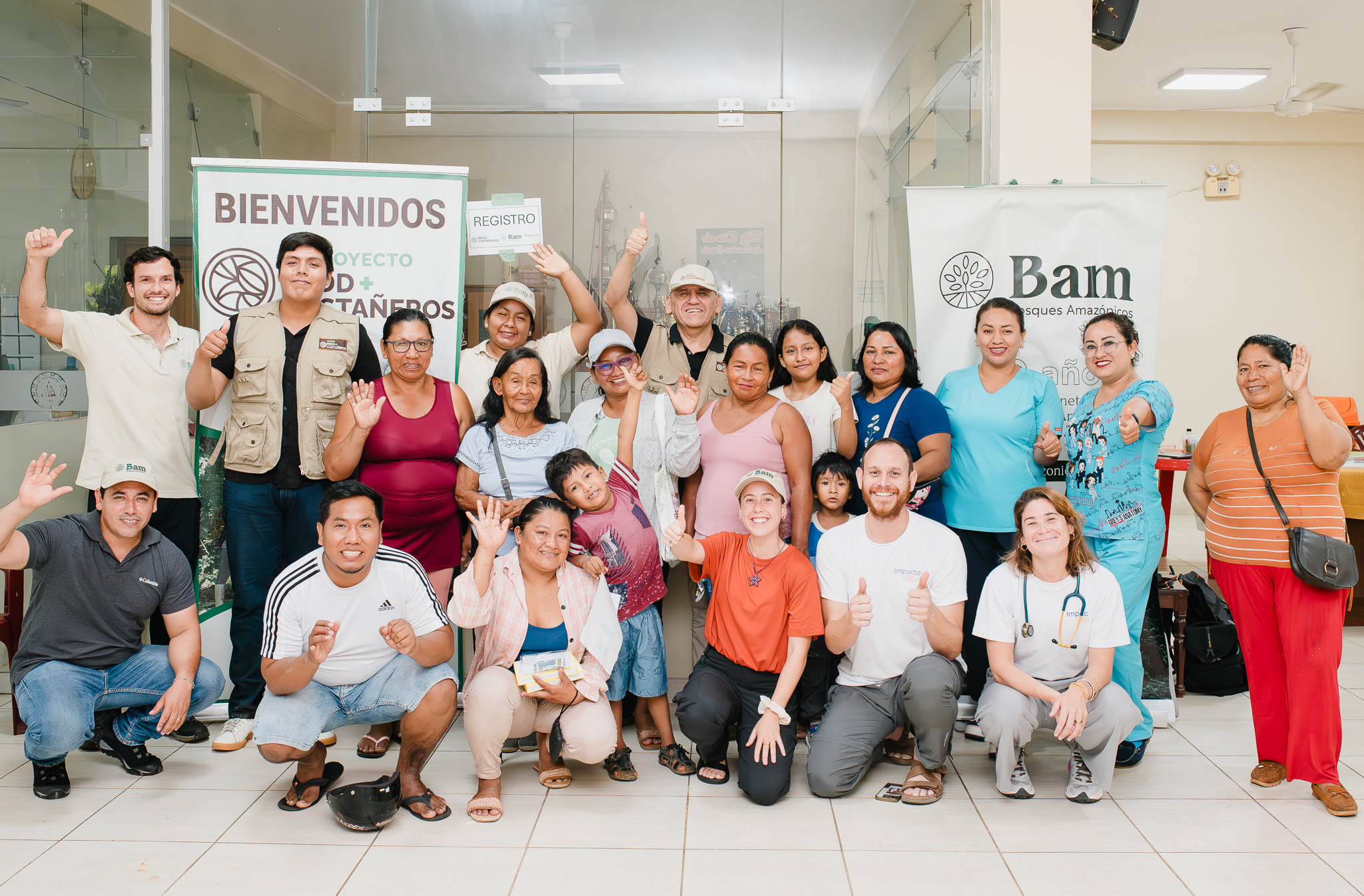
Carbon credits with REAL impact: 200 families benefited from the health campaign in REDD+ Castañeros
REDD+ Castañeros Madre de Dios is conducting a medical outreach campaign that benefits more than 200 families and demonstrates that carbon credits generate…