


New Frog Species Discovered in the Forests Protected by " REDD+ : The Last Habitat"!

During one of the biodiversity assessment expeditions conducted as part of the BAM Science Program in the protected forests under the conservation project REDD+ (The Last Habitat) at Ucayali, scientists discovered a new species of tree frog: Scinax pyroinguinis, whose Latin name means “fire-thigh frog” due to the bright orange spots that adorn its thighs.

The new species is known from two male specimens found in a patch of the Amazon rainforest at 160 meters above sea level. Scinax pyroinguinis has an elongated head that appears rounded when viewed from above, large conical tubercles on its eyelids and heels, and bright orange spots on its groin and legs. It is genetically and morphologically distinct from other members of the group, making it a new species to science.
This new scientific discovery highlights the importance of the work carried out by BAM to preserve what remains of these extraordinary forests in Ucayali, Peru, says Walter H. Wust, leader of the Science Program BAM.

Currently, this new species is known to exist only in the bosques amazónicos , which are protected by BAM. These areas have become one of the last remaining habitats for extraordinary biodiversity near the city of Pucallpa.
“We need to continue studying this new species. With only two specimens, we still know very little about it. We hope it may be found in other parts of the forests protected by BAM, so we will continue searching until we solve all the mysteries surrounding it,” said Germán Chávez, a researcher at the Peruvian Institute of Herpetology (IPH).
This research was conducted by a team of herpetologists ( experts in reptiles and amphibians) consisting of Germán Chávez of the Peruvian Institute of Herpetology, Wilmar Aznaran of Pedro Ruiz Gallo University, and Luis A. García-Ayachi and Alessandro Catenazzi of the University of Florida (U.S.). In addition, the scientific article has been published in the journal *Evolutionary Systematics*.


To date, the conservation project “ REDD+ : The Last Habitat” has preserved more than 20,000 hectares of the “ bosques amazónicos ” and its extraordinary biodiversity.
BAM, private investment for a sustainable world.
By: Walter Wust and Valeria Drinot
Continue reading
-
 News
The planet is getting warmer. What can we do about it?
The planet is getting warmer. And the consequences are becoming increasingly hard to ignore. This summer, heat waves, droughts, and…
-
 News
The Artisans of Inin Jabe: When Preservation Also Means Creating Opportunities
At the Bosques Amazónicos (BAM), we believe that conservation goes beyond protecting forests. It also means creating opportunities for the people who live…
-
 News
REDD+ Fellows Castañeros – Education as a Priority in the Amazon
Creating Opportunities for Future Generations At Bosques Amazónicos (BAM), we believe that conserving a forest also means investing in the people who protect it.…
-
 News
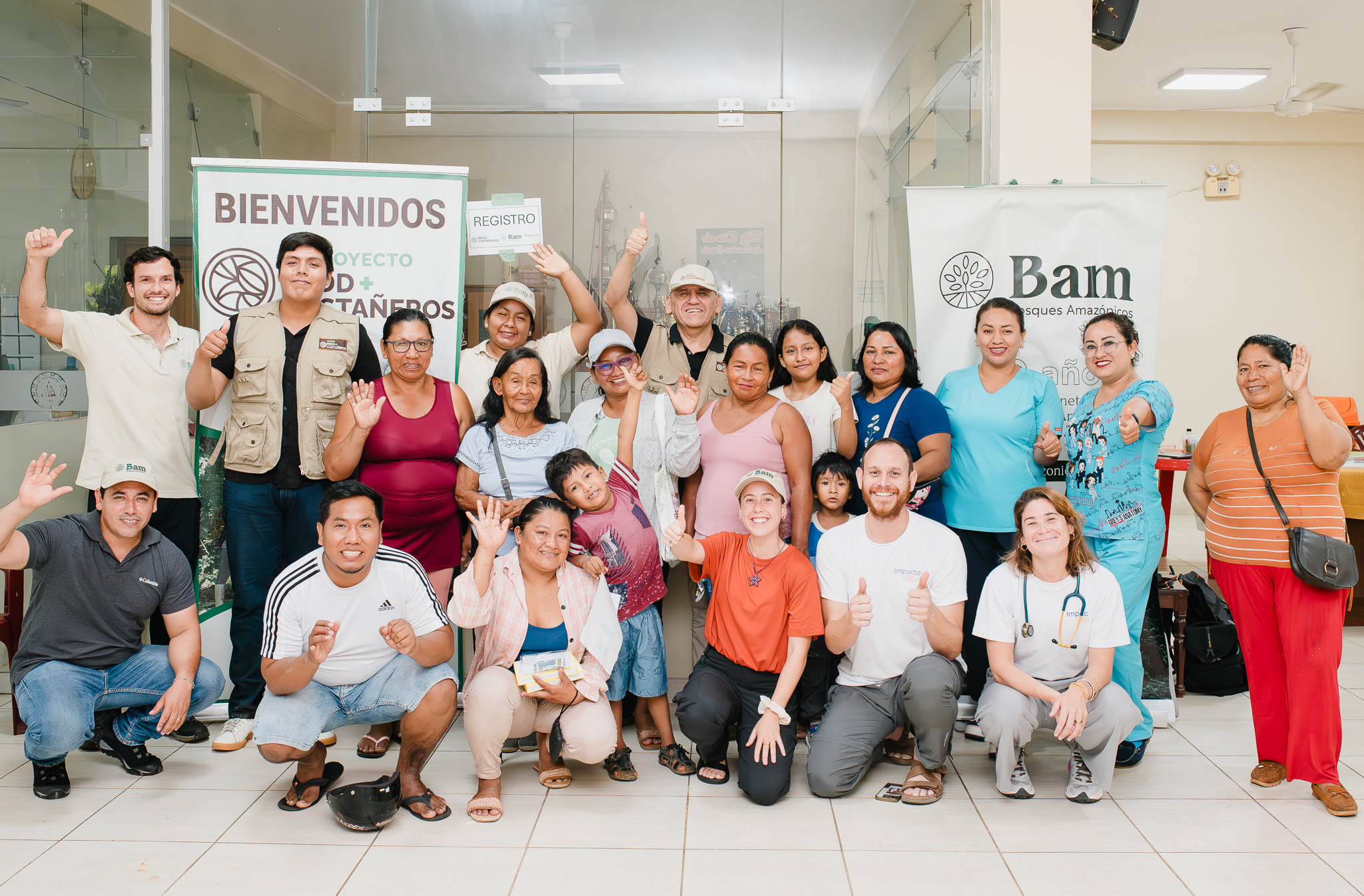
Carbon credits with REAL impact: 200 families benefited from the health campaign in REDD+ Castañeros
REDD+ Castañeros Madre de Dios is conducting a medical outreach campaign that benefits more than 200 families and demonstrates that carbon credits generate…