


BAM Wins the 2011 Business Eco-Efficiency Award

BAM It was named the winner of the 2011 Business Eco-efficiency Award in the Renewable Natural Resources category. This award is presented by the Ministry of the Environment (MINAM) and the Universidad Científica del Sur to companies that successfully promote sustainable development in Peru.

This award recognizes the efficient use and sustainable management of natural resources in our Reforestation Program at Campo Verde, located in the region Ucayali, 35 kilometers from the city of Pucallpa. Through this program, Bosques Amazónicos BAM has restored 730 hectares of degraded land to date by fertilizing the soil and planting more than 620,000 valuable native trees, such as the shihuahuaco (cumarú) and the marupa.
The 2011 Business Eco-Efficiency Award not only confirms BAM ’s leadership in reforestation projects in the Peruvian Amazon, but also reaffirms the importance of private investment for the growth of the forestry sector and the sustainable development of forests in Latin America and around the world.


Learn more about the reforestation program at Campo Verde from BAM
Shifting cultivation, illegal logging, and the overexploitation of natural forests have led to deforestation and degradation of vast areas in the Peruvian Amazon. In these low-value areas, Bosques Amazónicos BAM is implementing two efficient reforestation models that have been internationally validated and recognized: reforestation for the recovery of degraded soils and the restoration of depleted secondary forests.
The process begins with a biophysical analysis of the soil to identify the types of native species best suited to the area, continues with the production of plants in the nursery, and concludes with the planting of the future trees in the selected area, which has been previously fertilized and enriched by planting guaba or pacae (Inga edulis Mart.), a native fruit tree capable of fixing nitrogen in the soil and enriching it with organic matter, as well as suppressing the growth of competing grasses, providing shade and protection to optimize the development of forest species.
“Through this program, BAM has succeeded in restoring forests and biodiversity in degraded areas, connecting fragmented forests, and recreating habitats for wildlife. In addition, the project has helped build local communities’ capacity for sustainable forest management by promoting low-impact selective logging techniques, as well as knowledge about managing nurseries and plantations, which not only fosters more equitable economic development but also discourages traditional, unproductive agricultural practices,” explains Jorge Cantuarias, founder of BAM.
Continue reading
-
 News
The planet is getting warmer. What can we do about it?
The planet is getting warmer. And the consequences are becoming increasingly hard to ignore. This summer, heat waves, droughts, and…
-
 News
The Artisans of Inin Jabe: When Preservation Also Means Creating Opportunities
At the Bosques Amazónicos (BAM), we believe that conservation goes beyond protecting forests. It also means creating opportunities for the people who live…
-
 News
REDD+ Fellows Castañeros – Education as a Priority in the Amazon
Creating Opportunities for Future Generations At Bosques Amazónicos (BAM), we believe that conserving a forest also means investing in the people who protect it.…
-
 News
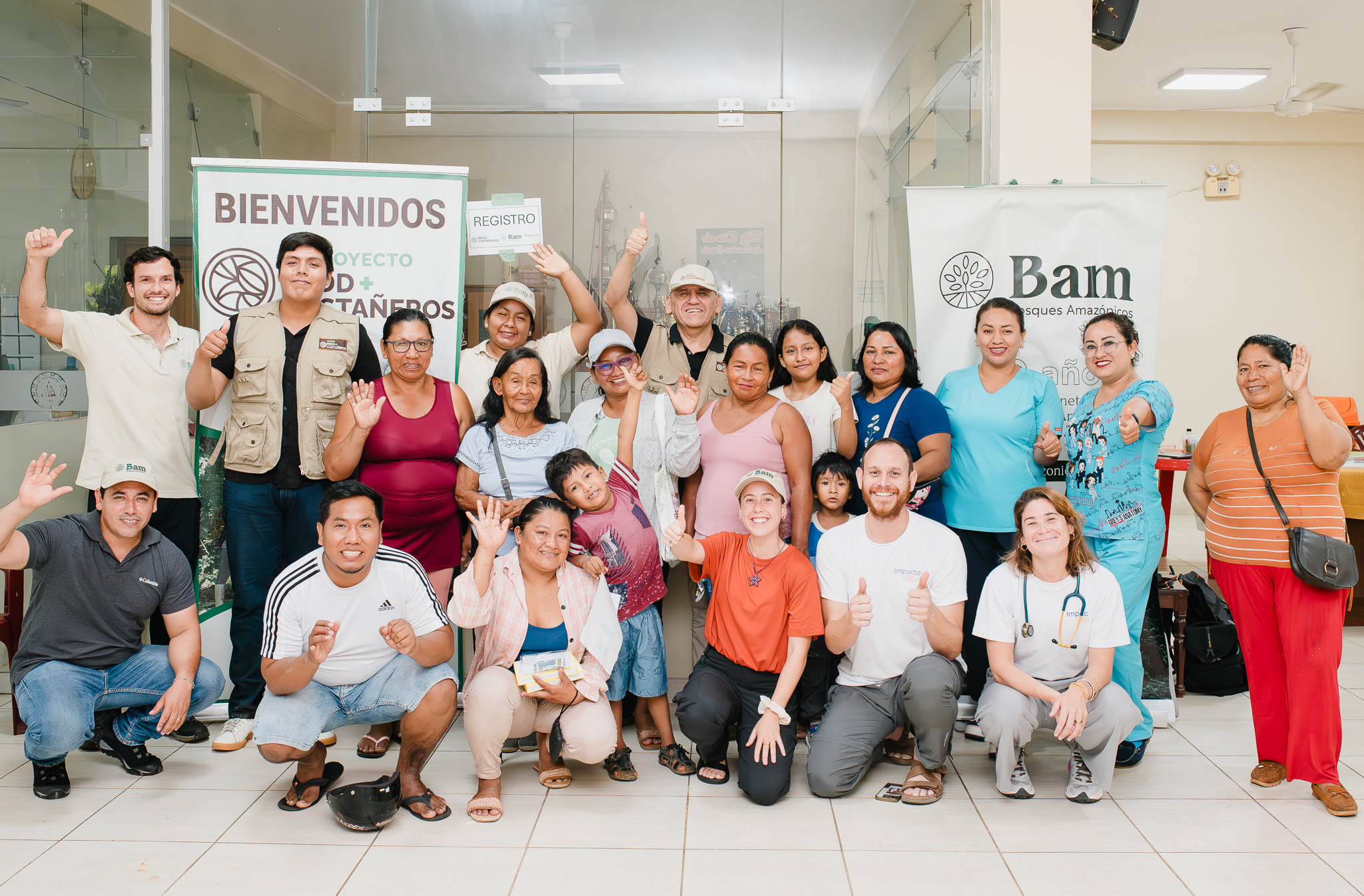
Carbon credits with REAL impact: 200 families benefited from the health campaign in REDD+ Castañeros
REDD+ Castañeros Madre de Dios is conducting a medical outreach campaign that benefits more than 200 families and demonstrates that carbon credits generate…