


Science, Technology, and the Environment: The Science Program of BAM

In a world where concern about climate change is on the rise, it is essential that companies play an active role in protecting and conserving our natural resources. In this regard, Bosques Amazónicos (BAM) stands out for its commitment to research and nature conservation in our Amazon region. In this article, we will explore in detail the BAM Science Program and how it is contributing to the well-being of the forests and their inhabitants.
The program is led by forestry engineer Walter H. Wust, director of BAM, and is carried out in partnership with nationally and internationally renowned scientific organizations, such as the Center for Ornithology and Biodiversity (CORBIDI), the San Diego Zoo, the Herbarium of the National Agrarian University of La Molina, the Javier Prado Museum of Natural History at the National University of San Marcos, and Perú Verde.


Wildlife: Ongoing Monitoring for Conservation
BAM has taken on the responsibility of continuously monitoring the health of the Amazonian forests. This involves meticulously tracking wildlife and water sources in key areas, such as the departments of Madre de Dios and Ucayali. This ongoing monitoring is essential for understanding how ecosystems are changing and for taking proactive measures to ensure their conservation and recovery.
A Key Tool for Monitoring: Camera Traps
Camera traps play an essential role in wildlife research and conservation in natural areas by providing valuable data on the presence of rare wildlife species and insights into their behavior, thereby contributing to the protection of ecosystems.


In the Science Program BAM , camera traps are used for a variety of purposes, such as:
- Wildlife Research: Camera traps are essential tools for studying wildlife in their natural habitat. They capture images and videos of animals discreetly and nonintrusively, allowing scientists and conservationists to observe the behavior, distribution, and abundance of species.
- Monitoring Endangered Species: In natural areas where endangered species live, camera traps are crucial for recording their presence and supporting conservation efforts. These cameras can confirm the existence of rare species and provide valuable data for their protection.
- Ecological studies: Camera traps help ecologists understand the interactions between different species and their relationship with the environment. This includes observing how animals feed, reproduce, and use their habitat.
- Population Assessment: Using camera traps, it is possible to estimate the population density of animals in a specific area. This is essential for population management, especially in protected natural areas and private conservation areas.
- Detection of nocturnal activity: Many animals are nocturnal and difficult to observe directly. Camera traps can be equipped with infrared sensors, allowing them to capture images of animals at night and providing a comprehensive view of their activity.
“Camera traps have revolutionized our understanding of wildlife; by allowing us to uncover their secrets without disturbing the species, they provide us with amazing images and key insights for the conservation of creatures that are vital to the ecosystem but rarely seen by humans.” – says Walter Wust, director and head of the Science Program BAM


Discovering, Understanding, and Protecting Biodiversity
The primary objective of the BAM Science Programis to discover, understand, and protect the rich biodiversity of the areas under its stewardship. This includes both private lands and areas managed by castañeros and forestry concessionaires. The research conducted by BAM takes a multifaceted approach, ranging from assessing conservation status to identifying endangered species.
The activities carried out in the area can be divided into three fundamental objectives, all of which are aimed at protecting the ecosystems within our spheres of influence:
1. Assess the conservation status: The program begins by assessing the state of conservation of forests on private lands and concessions. This provides a clear picture of the health of these ecosystems. Through biodiversity inventories, endangered or threatened species are identified, allowing for immediate measures to be taken to protect them.
 2. Identification of new species: BAM 's research has also led to the discovery of new species to science. This highlights the critical importance of this research and underscores the need to continue documenting and studying biodiversity from the bosques amazónicos. As part of the program, an ecological characterization of all natural communities on the properties is being conducted (primary and secondary forests, riparian zones, and disturbed areas). This will help refine the studies conducted in the area to improve our conservation practices and sustainable processes.
3. Restoration, Conservation, and Utilization: To the extent possible, the most valuable natural habitats in the area are restored with the goal of facilitating the return of wildlife and encouraging natural processes such as pollination, the restoration of ecosystem balance, ecotourism, and more. This helps determine how forest resources can be used sustainably. In addition, the management of resources by forest con castañeros , and concessionaires is improved, benefiting both nature and local communities.
The Vital Role of the Local Community
One of the cornerstones of the program is the active participation of local communities in the protection and sustainable use of forests. Walter H. Wustpoints out that involving the local population is essential to strengthening monitoring and ensuring that these valuable resources are used sustainably.
“Local communities know better than anyone that nature conservation is not a luxury but a necessity. Proper forest management should enable nature to provide its ecosystem services and, above all, improve the quality of life of local residents,” says Walter Wust, director and head of the Science Program. BAM


Partnerships with prestigious organizations
It is important to note that BAM ’s commitment extends beyond its own operations. It works closely with renowned organizations, such as CORBIDI and the Natural History Museum of the National University of San Marcos, the Herbarium of the National Agrarian University – La Molina , and the San Diego Zoo. This collaboration further strengthens conservation efforts.
Global Awareness of Amazonian Biodiversity
Ultimately, BAM hopes that its work will raise greater awareness, both nationally and internationally, of the importance of biodiversity in bosques amazónicos. These ecosystems are not only vital to environmental balance but also a fundamental resource for future generations.
In summary, the comprehensive approach of BAM, the active participation of local communities, and collaboration with renowned scientific organizations are fundamental aspects that are taking the Science Program to a new level. By contributing to the understanding and protection of these ecosystems, BAM plays an essential role in the conservation of Amazonian ecosystems and in improving the quality of life for the people who live there.


More about BAM
In the protected areas under our conservation project “ REDD+ : The Last Habitat” at Campo Verde, Ucyali, more than 20,000 hectares of forest and their extraordinary biodiversity are protected. In addition, a new species to science,“Scinax pyronguinis,”, also known as the “fire-bellied toad,” was discovered.
Join the fight against climate change and become part of the community by Bosques Amazónicos by clicking here.
BAM, private investment for a sustainable world.
Continue reading
-
 News
The planet is getting warmer. What can we do about it?
The planet is getting warmer. And the consequences are becoming increasingly hard to ignore. This summer, heat waves, droughts, and…
-
 News
The Artisans of Inin Jabe: When Preservation Also Means Creating Opportunities
At the Bosques Amazónicos (BAM), we believe that conservation goes beyond protecting forests. It also means creating opportunities for the people who live…
-
 News
REDD+ Fellows Castañeros – Education as a Priority in the Amazon
Creating Opportunities for Future Generations At Bosques Amazónicos (BAM), we believe that conserving a forest also means investing in the people who protect it.…
-
 News
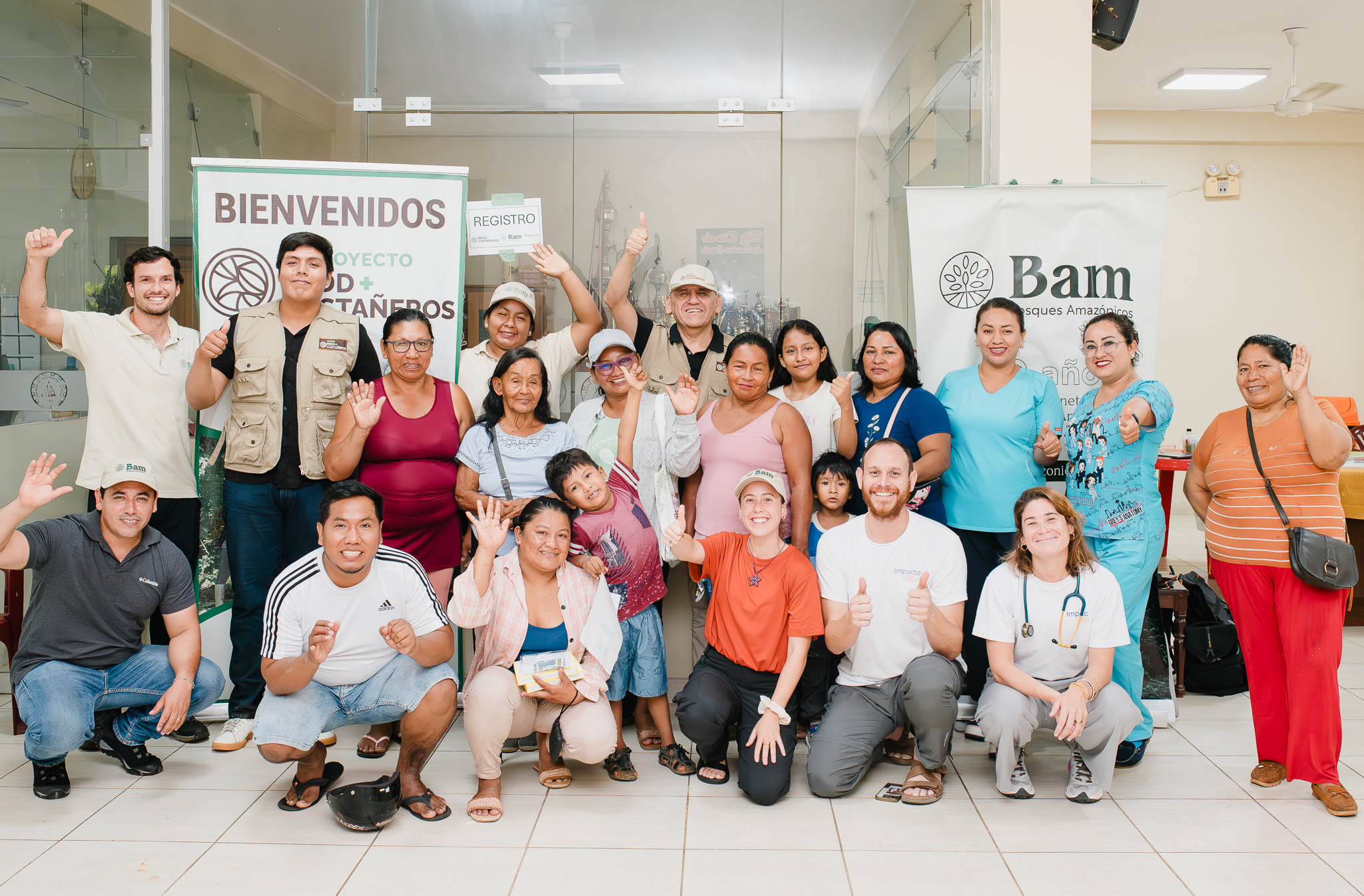
Carbon credits with REAL impact: 200 families benefited from the health campaign in REDD+ Castañeros
REDD+ Castañeros Madre de Dios is conducting a medical outreach campaign that benefits more than 200 families and demonstrates that carbon credits generate…