


REDD+ Castañeros: preserving the Brazil nut forests of Madre de Dios

Conserving Brazil nut Forests
Don Alfonso walks confidently along the muddy trail that winds deep into the forest. He is a short man with a sturdy build and the smile of a loving grandfather. He carries a wooden staff—called a payana—and a handwoven basket made of tamshi fibers. The path, barely visible, winds through the vegetation, and he follows it using a detailed mental map that connects the harvesting sites on his concession of just over 1,000 hectares, located in the town of San Juan de Aposento, in Mavila, Madre de Dios.

Suddenly, he stops. A gigantic Brazil nut tree marks the end of the trail. It is a natural monument that has stood in this jungle for more than 200 years. Its trunk, dark and covered in moss, would take half a dozen people to encircle. Towering above the forest, its branches—as thick as an ox—spread out like a giant umbrella more than 40 meters high. On the ground, half-buried in the mud, lie several dozen coconuts about 15 cm in diameter and as hard as stone.

After gathering about fifty of them in a pile at the foot of the large tree, Alfonso sits on the ground to crack open the coconuts one by one. With breathtaking dexterity, he delivers a powerful blow to the coconut, cracking the shell without damaging a single nut. With the precision of a watchmaker, he places the nuts in a sack while tossing the empty coconut aside. It is a rhythmic motion, the kind that has been honed over the years.

Her Majesty, the Brazil nut
Known and utilized by indigenous peoples since time immemorial, and commercially harvested for over a century, this remarkable Amazonian tree continues to play a vital role in the natural composition of the forests and in the lives of the inhabitants of Peru’s southeastern rainforests.
The Brazil nut (Bertholletia excelsa) is one of the main forest resources in the department of Madre de Dios. More than 16,000 square kilometers of natural forest communities dominated by this species—known locally as “castañales”—have been identified within the department’s territory. Studies conducted in the 2000s—prior to the mining boom in the region—indicated that two-thirds of the total population of Madre de Dios depends in one way or another on this resource.

Brazil nut forests are unique in the world and are found only in the natural triangle formed by the border between Peru, Brazil, and Bolivia.
A Major Threat of Deforestation
In 2009, the construction of the Southern Interoceanic Highway between Peru and Brazil posed a major threat of deforestation to one of the planet’s most biodiverse areas: the forests allocated to small-scale Brazil nut concessionaires in the Peruvian department of Madre de Dios. Various scientific studies conducted in protected natural areas adjacent to the Brazil nut region (such as Manu and Tambopata) have shown that the high-terrace forests where Brazil nuts grow are home to more plant and animal species than anywhere else in the world, including endangered species such as the otter, the jaguar, the puma, the lowland tapir, and the giant anteater.
According to projections made at the time, the increased accessibility created by the new highway would result in the deforestation of 34% of the area’s natural forests by 2041. In addition to connecting Brazil to the Pacific and Asian markets, this megaproject would open the door to large numbers of migrants in search of land—and, with them, the consequences that accompany migratory agriculture: the extinction of key species (birds and large mammals, which often serve as key seed dispersers for commercially important tree species), illegal logging, and low-yield crops.
Since the highway was completed in 2009, the migration of Andean residents seeking to exploit the forest’s natural resources (timber, alluvial gold) has caused the rate of deforestation in the region to increase fourfold (Ministry of the Environment – MINAM).

BAM and the project REDD+ Castañeros
The destruction of tropical forests accounts for one-fifth of greenhouse gas emissions, which prevents us from achieving the emissions reductions necessary to avoid a global climate catastrophe. Faced with the growing threat of deforestation in the region, BAM launched one of the world’s first REDD+ conservation programs: REDD+ Castañeros (or “ REDD+ Brazil Nut Concessions” in English), seeking to protect the value of the forests by generating sustainable economic activities that yield tangible benefits for local communities.
That is how the project “ REDD+ ” (Castañeros ) was launched in 2009, bringing together more than 650 Brazil nut-producing families in the “Federación de Castañeros ” ( Madre de Dios ) (FEPROCAMD) with the goal of protecting 500,000 hectares of Brazil nut forests threatened by the new highway. The first step was to consolidate the association of the concessionaires—who had been scattered until then—and to work diligently on the conservation of the Brazil nut groves through concrete efforts such as the provision of revolving loans and a permanent protection program. In this way, for more than a decade, the BAM , and 600 families organized under the FEPROCAMD , have protected more than 320 million trees and prevented the emission of approximately 2.5 million metric tons ofCO2 per year.
REDD+ Castañeros It was one of the first initiatives REDD+ to be validated and verified globally by the Voluntary Carbon Standard (VCS), the most important international carbon standard.
In addition to economic benefits for the community from the sale of carbon credits, the project provides technical and legal advice to concession partners to help them protect and sustainably manage their forests; support for the legal regularization of their concessions; a monitoring system to protect the areas; pilot projects for community-based value chains; ongoing training for partners on sustainable forest management and other topics of interest; and more.

A Dream Within Reach for the Guardians of the Forest
Like Don Alfonso, Florencia Paredes has raised her children and supported her family by gathering Brazil nuts. “I’m so happy to have this wonderful forest,” says Paredes, who is now a leader of the Federation of Castañeros, as she wipes the mud off her rubber boots. It’s hard work, but very rewarding—it allows for independence and ensures a dignified life.

Forests that give life—not only to people but also to one of the most wonderful and diverse ecosystems on Earth—that foster development among local communities and demonstrate that conservation—far from being a luxury—is a way of life that allows the stewards of this great natural resource to build a future of well-being for their families.
Text and photographs: Walter H. Wust


Continue reading
-
 News
The planet is getting warmer. What can we do about it?
The planet is getting warmer. And the consequences are becoming increasingly hard to ignore. This summer, heat waves, droughts, and…
-
 News
The Artisans of Inin Jabe: When Preservation Also Means Creating Opportunities
At the Bosques Amazónicos (BAM), we believe that conservation goes beyond protecting forests. It also means creating opportunities for the people who live…
-
 News
REDD+ Fellows Castañeros – Education as a Priority in the Amazon
Creating Opportunities for Future Generations At Bosques Amazónicos (BAM), we believe that conserving a forest also means investing in the people who protect it.…
-
 News
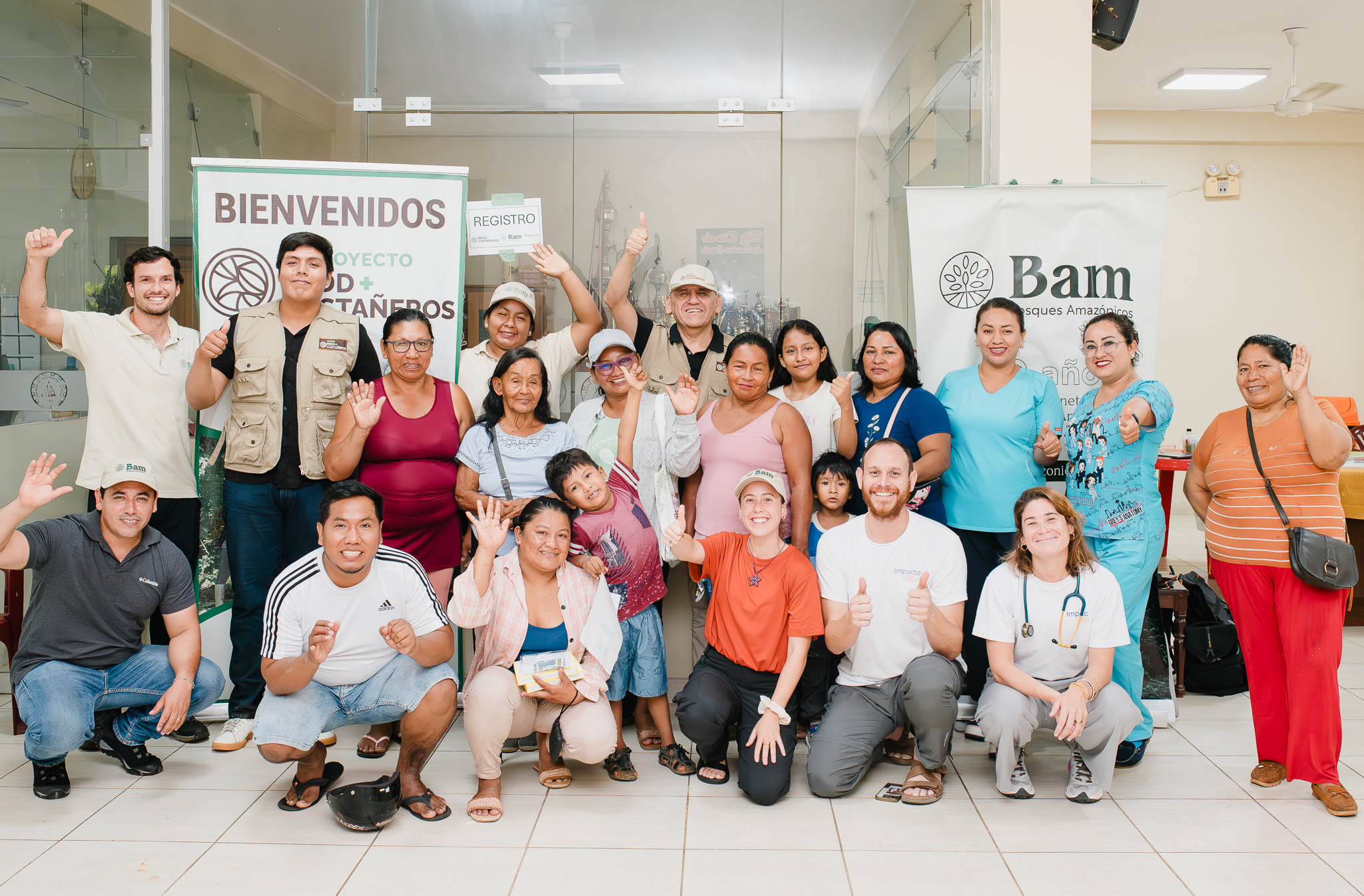
Carbon credits with REAL impact: 200 families benefited from the health campaign in REDD+ Castañeros
REDD+ Castañeros Madre de Dios is conducting a medical outreach campaign that benefits more than 200 families and demonstrates that carbon credits generate…